
Most people don’t regret upgrading their outdoor space. They regret doing it twice. That usually happens when the first version wasn’t planned properly. This guide looks at whether professional landscape design is worth it, not just from a cost angle, but from what actually happens over time, budget overruns, design issues, and how small mistakes quietly turn into expensive fixes.
Is Professional Landscape Design Worth It?
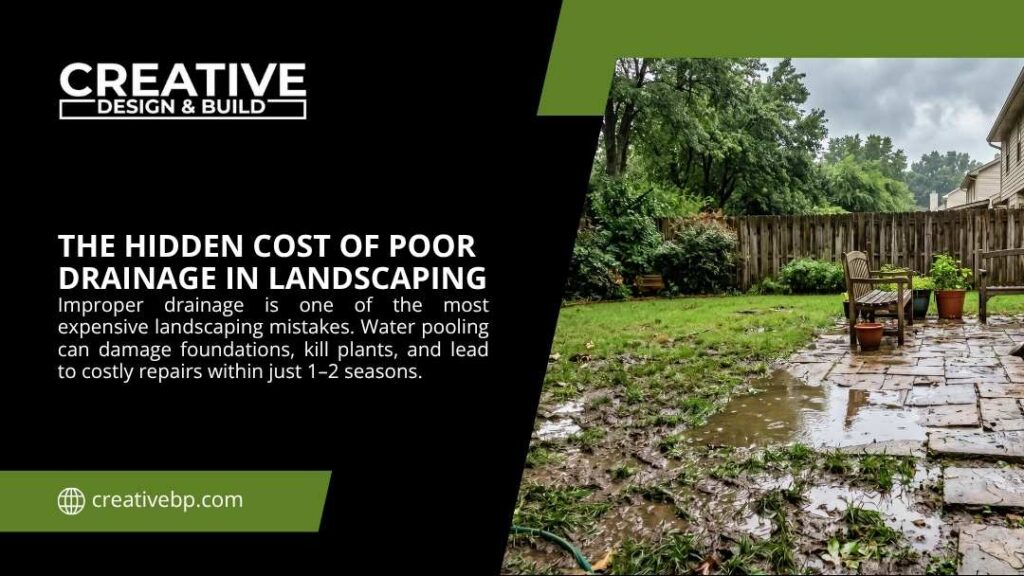
Here’s where things usually go wrong. People start a project thinking they’ll figure it out as they go. At first, it feels manageable. Then something shifts, literally. Pavers settle unevenly. Water collects where it shouldn’t. The layout doesn’t feel right.
So when someone asks, is professional landscape design worth it, they’re often already dealing with the aftermath. A properly designed outdoor space doesn’t just look clean in photos. It holds together season after season. It drains correctly. It feels balanced without you having to constantly adjust things.
That’s the real difference: less fixing, more using. And when you look at it that way, landscape design’s worth becomes less about upfront cost and more about long-term control, especially when you’re deciding if it’s worth hiring a landscape designer for a project that involves structural elements.
So, if you’re still asking, is professional landscape design worth it? The better question might be, how much risk are you avoiding by not guessing your way through it?
What Does Professional Landscape Design Actually Include?
Most people assume design is just layout. It’s not. There’s a layer underneath that most homeowners never see: grading, soil prep, drainage direction, and material compatibility. Miss one of those, and the whole project starts to age faster than it should.
A typical process starts with a walkthrough, then moves into planning, revisions, and eventually build-ready drawings. That last part matters more than people expect. Because a design that looks good on paper but doesn’t translate to construction? That’s where projects fall apart.
In colder regions like Michigan, where freeze-thaw cycles are constant, material choice, stone, pavers, and base layers, becomes less about looks and more about survival. In high-end Southeast Michigan properties, especially where outdoor living spaces are expected to match interior quality, premium craftsmanship and material selection are not optional; they define whether the project holds its value over time.
This is why working with a team that combines design and execution, like those offering a structured landscape design service, tends to produce more consistent results.
Cost vs Value: Does Landscape Design Pay Off?
There’s always hesitation around cost. That part doesn’t change. But what often gets ignored is how unpredictable costs become without a plan.
| Project Type | Initial Cost | Long-Term Outcome |
| DIY Landscaping | Lower upfront | Higher correction costs |
| Basic Professional Design | Moderate | Balanced ROI |
| Full Design-Build Project | Higher upfront | Maximum durability + value |
For example, one homeowner in Michigan invested around $12,000 in a DIY patio installation. Within two winters, improper base preparation caused shifting and drainage issues. Planning matters just as much on the return side, since knowing which outdoor living investments actually pay back helps you direct budget toward features that hold their value instead of ones that quietly drain it. The redesign and reconstruction cost an additional $18,000, more than the original build.
According to the Project EverGreen Report, well-designed landscaping can increase a home’s value by up to 15-20%. That statistic gets quoted a lot. But here’s what doesn’t get mentioned as often: Poor landscaping can reduce perceived value just as quickly.
So the conversation around outdoor living investment isn’t just about gains. It’s also about avoiding losses.
Landscaping Design Pros: What You Actually Gain
There’s the obvious part, curb appeal. That’s easy to notice. But the bigger shift happens in how the space is used. A well-designed layout doesn’t feel random. You don’t walk through it wondering where things should go. Seating areas make sense. Paths feel natural. Lighting works without being noticeable.
It’s subtle, but it changes how often you actually use the space. Then there’s durability. And this is where a lot of projects quietly fail. Higher-end materials, natural stone, and properly installed pavers don’t just look better; they hold up better. Without the right base or planning, even expensive materials won’t last.
How Hiring a Landscape Designer Saves You Money
This part usually sounds counterintuitive at first. Pay more upfront to save later? Not always convincing. But here’s a common scenario.
A homeowner installs a patio without a proper base depth. Everything looks fine for the first year. Then winter hits. By spring, sections have shifted. Water sits where it shouldn’t. Repairs begin.
That second round of work often costs more than doing it right the first time. That’s where hiring a landscape designer changes things. The planning phase catches issues before they show up physically. Budget control improves, too. Not because costs disappear, but because they become predictable.
When comparing DIY landscaping vs hiring a professional, the real difference often comes down to hidden costs. DIY projects can seem more affordable upfront, but unexpected expenses, like tool rentals, material waste, or fixing mistakes, can quickly add up. In contrast, hiring a landscape designer helps identify potential issues early, reducing the risk of costly corrections and ensuring a more efficient overall process.
DIY Landscaping vs Hiring a Professional: What Really Happens
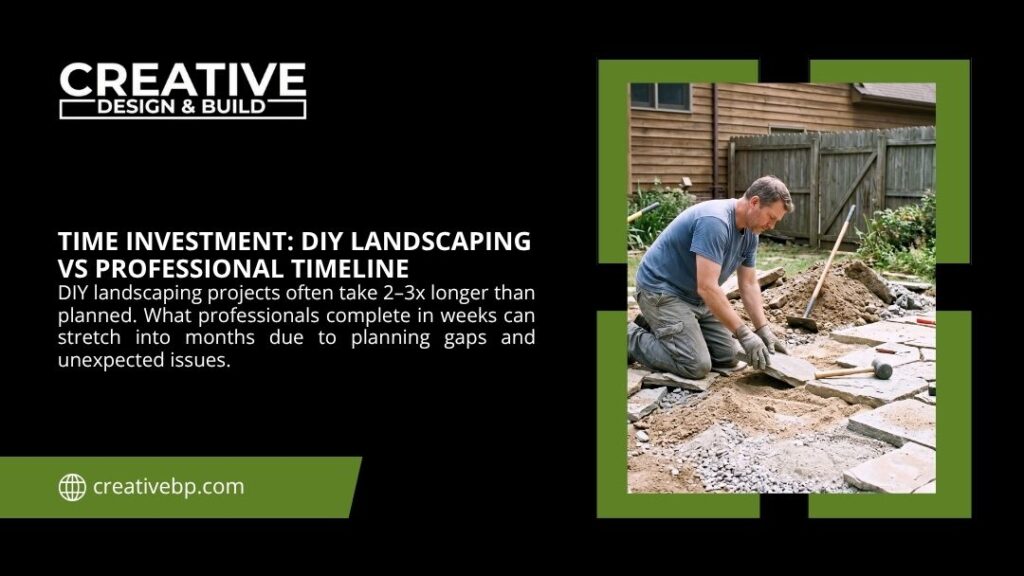
DIY projects don’t fail immediately. That’s what makes them tricky. They usually start well. Progress feels visible. Then inconsistencies begin to show.
| Factor | DIY Outcome | Professional Outcome |
| Budget | Unpredictable | Structured |
| Time | Extended | Managed |
| Design Quality | Fragmented | Cohesive |
| Risk | High | Controlled |
A homeowner in Oakland County spent nearly four months building a backyard in phases, first a patio, then a walkway, then a seating area. The total cost reached $22,000. However, because there was no unified plan, the layout had to be redesigned, adding another $9,000 in corrections. That’s the gap. Professionals design the space as a whole before anything gets built.
The Design Process: Why It Matters More Than You Think
A process might sound like a formality, but in landscaping, it’s usually the difference between a project that holds up and one that slowly falls apart.
Most homeowners don’t see the early stages, but that’s where the real decisions happen. It starts with a site walkthrough, looking at grading, drainage patterns, sun exposure, and how the space is actually used. From there, the design phase develops layouts that account for both aesthetics and structural needs. For homeowners spreading the investment over time, planning a backyard renovation in phases keeps those early design decisions from being undone by later stages.
What follows is where many projects either stay on track or drift. Material selection isn’t just about preference; it has to match the climate. In Southeast Michigan, for example, base preparation and frost movement play a major role in how long surfaces like pavers or stone actually last. A structured design-build approach typically follows a sequence like this:
| Phase | What Happens | Why It Matters |
| Consultation | Site review, goals, and budget discussion | Sets realistic expectations |
| Design Planning | Layouts, drainage, material selection | Prevents costly design flaws |
| Pre-Construction | Final plans, scheduling, and coordination | Keeps timelines controlled |
| Build Execution | Installation, adjustments, quality checks | Ensures design is followed accurately |
| Ongoing Maintenance | Care, adjustments, seasonal upkeep | Protects long-term investment |
Teams that handle both design and construction under one system tend to reduce miscommunication significantly, which is why design-build firms continue to outperform fragmented contractor setups.
Design-build firms that manage everything under one system through a design-build approach reduce delays and eliminate the disconnect between planning and execution.
Is It Worth Hiring a Landscape Designer for Small Projects?
Not every project needs full-scale design involvement, and that’s where many homeowners get stuck. If the work is limited to simple planting or minor cosmetic updates, it can often be handled without professional planning. But the line shifts quickly once the project involves more than one element.
Even something that seems straightforward, like adding a patio, can introduce hidden variables. Drainage direction, base depth, and material expansion all affect how the surface performs over time.
In smaller projects, the risk isn’t always immediate; it’s delayed. Issues tend to show up after a season or two, when correcting them becomes more expensive than the original work. That’s why, even at a smaller scale, hiring a landscape designer can still be worth it when structural elements are involved.
Real Projects: What Professional Design Looks Like
The difference between a designed space and an improvised one isn’t always obvious at first glance, but it becomes clear over time. A professionally designed project usually feels balanced without needing explanation. Movement through the space feels natural. Seating areas don’t compete with pathways. Lighting doesn’t overpower the layout; it supports it.
In one recent Southeast Michigan project, a backyard initially consisted of a disconnected patio, uneven lawn space, and poor drainage along the foundation. After the redesign, the same space included a structured seating area, proper grading, integrated lighting, and a clear transition between zones.
The cost increased during the redesign phase, but the final result eliminated ongoing maintenance issues and improved usability year-round. That’s typically how these transformations work. The space doesn’t just look different, it works differently.
You can see this level of cohesion in real-world examples through completed landscape projects, where layout, materials, and function are aligned from the start rather than adjusted later.
Common Mistakes Homeowners Make Without a Designer
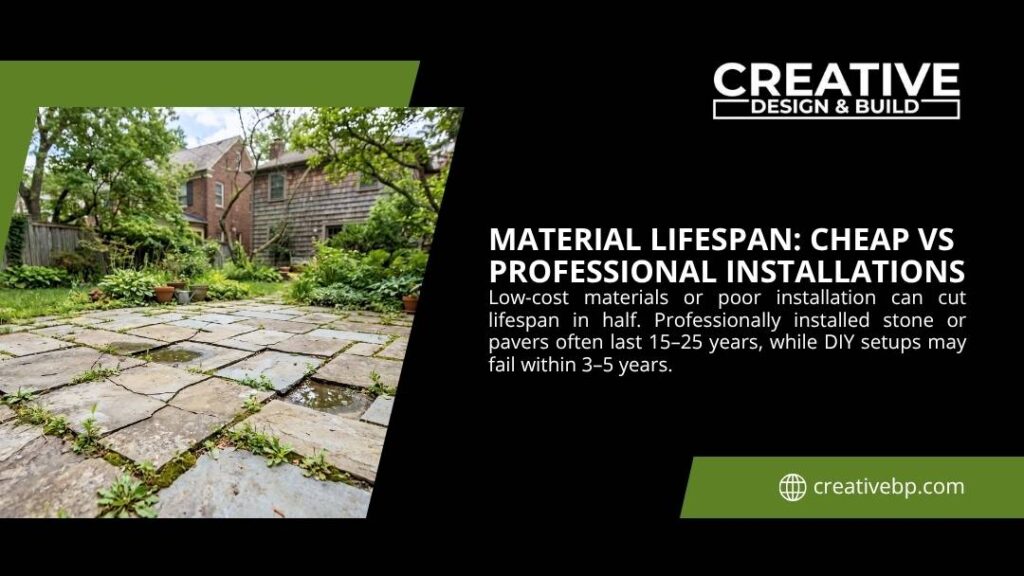
Most landscaping mistakes don’t come from poor execution; they come from poor planning. At first, everything looks fine. Then small issues begin to surface. Water doesn’t drain properly. Materials shift. Certain areas become unusable. These problems tend to build over time, and fixing them often requires partial or complete reconstruction.
| Mistake | What Happens Over Time | Resulting Cost Impact |
| Poor drainage planning | Water pooling, soil erosion | Foundation damage, redesign costs |
| Incorrect base preparation | Pavers or stone shift unevenly | Full surface reconstruction |
| Wrong plant material | Plants fail to thrive | Replacement and maintenance costs |
| Disconnected layout | Space feels unusable | Redesign required |
| No long-term planning | Features don’t integrate | Wasted materials and labor |
The pattern is consistent; small oversights in the beginning lead to larger corrections later. That’s where structured design proves its value before anything is built.
When Professional Landscape Design Is Clearly Worth It
There are certain situations where the decision becomes straightforward. Projects that involve multiple elements, such as patios, walkways, fire features, or outdoor kitchens, require coordination. Without a plan, these features often compete rather than complement each other.
Larger properties also benefit more from design. The scale alone introduces complexity that’s difficult to manage without a structured approach. In higher-end Southeast Michigan homes, outdoor spaces are expected to match the quality of the interior.
That level of expectation requires more than basic installation; it requires planning, sequencing, and material alignment. This is where landscape design worth becomes less of a question and more of a requirement.
When It Might Not Be Worth It
There are situations where professional design may not add proportional value. Small, short-term upgrades, like replacing a few plants or refreshing a single area, may not require full planning. If the goal is quick improvement rather than long-term performance, simpler approaches can work.
Homeowners planning to sell within a short timeframe may also focus on visual upgrades rather than structural improvements. However, it’s worth noting that skipping planning doesn’t remove cost; it often shifts it into future maintenance or repairs.
How to Choose the Right Landscape Designer
Choosing the right designer isn’t just about style; it’s about how they approach the process. Some designers focus only on concepts. Others stay involved through construction. The difference between those two approaches often determines how closely the final result matches the original plan.
Experience with local conditions matters as well. In climates like Southeast Michigan, understanding soil movement, drainage behavior, and seasonal changes is critical. Designers who combine planning with execution tend to deliver more consistent outcomes, especially on projects where multiple elements need to work together.
Clear communication during the initial consultation is another indicator. If the process feels unclear at the start, it rarely becomes clearer later.
So, Is Professional Landscape Design Worth It?
Yes, but mostly because of what it prevents. It prevents rework. It prevents wasted materials. It prevents layouts that don’t function the way they should. For homeowners planning anything beyond simple upgrades, hiring a landscape designer turns uncertainty into something more controlled.
If you’re considering a project and want a clearer path forward, exploring full-service offerings can help you understand what’s involved before committing. Because in most cases, the real expense isn’t the design, it’s fixing what happens without it.
Is landscape design worth the money?
The value of landscape design becomes clearer when viewed over time rather than at the moment of investment. Upfront costs are visible. Long-term savings are not.
A well-planned project reduces the likelihood of rework, extends the lifespan of materials, and minimizes maintenance issues. Over several years, those factors often offset the initial design cost.
In many cases, homeowners who skip the design phase end up spending more correcting issues than they would have spent planning them properly. That’s why landscape design’s worth is often measured not by what you spend, but by what you avoid spending later.
Do I need a landscape designer for a patio or outdoor space?
It depends on the complexity of the project. A simple patio installation may not require full design services. But once factors like grading, drainage, or integration with other features come into play, the need for planning increases.
Patios, in particular, are one of the most common areas where problems develop. Without proper base preparation and slope control, surfaces can shift, settle, or collect water.
This is where hiring a landscape designer becomes less about design preference and more about structural reliability. For outdoor spaces that include multiple features, seating areas, walkways, and lighting, the benefit of a cohesive plan becomes even more noticeable over time.
FAQs About Hiring a Professional Landscape Designer
Is it worth hiring a landscape designer for a backyard project?
Yes, especially when you’re asking if it’s worth hiring a landscape designer for a backyard that includes multiple features. Planning reduces mistakes and improves long-term results.
How much does professional landscape design cost?
Costs vary, but design fees are typically a small portion of the overall project and often prevent larger expenses later.
How long does landscape design take?
It depends on complexity, but proper planning usually shortens construction time overall.
DIY vs professional landscaping, which is better?
DIY works for small projects. For complex layouts, professional design offers better durability and cost control.
What This Means for Your Next Project
If you’re planning a project in Southeast Michigan, the smartest move is getting it right the first time. Explore the full-service approach at Creative Design Build Associates and see how design, build, and maintenance come together, without the guesswork.
Because in most cases, the real cost isn’t hiring a professional, it’s fixing what happens when you don’t. And that’s exactly where professional landscape design proves its worth.