
DIY landscaping vs hiring professional looks straightforward at first glance. It feels like a cost decision. In practice, it rarely stays that simple. What starts as an attempt to save money often turns into something else entirely, time commitments grow, materials don’t behave as expected, and the final result doesn’t always match the original idea. Some projects come together just fine on their own. Others, not so much. This guide takes a closer look at both approaches, what they involve, where they tend to work, and where things can start to slip.
DIY Landscaping vs Hiring Professional: A Complete Comparison
The debate around DIY landscaping vs hiring professional usually gets reduced to a simple trade-off: spend less or hire help. That way of looking at it leaves out a lot.
When homeowners take on DIY landscaping, the process tends to unfold gradually. One improvement leads to another. A small change here, a fix there. It evolves. There’s a certain freedom in that, but it can also lead to uneven results because decisions aren’t always made with the full picture in mind.
Professionals approach the same space differently. They don’t start with individual pieces; they start with the whole layout. From there, everything else follows: materials, drainage, structure. There’s an order to it. And that order affects more than appearance. It influences how the space holds up months or even years later.
What DIY Landscaping Really Involves
It’s easy to think of DIY landscaping as simple work: planting, arranging, maybe adding a few features. But once you’re in it, the scope tends to widen.
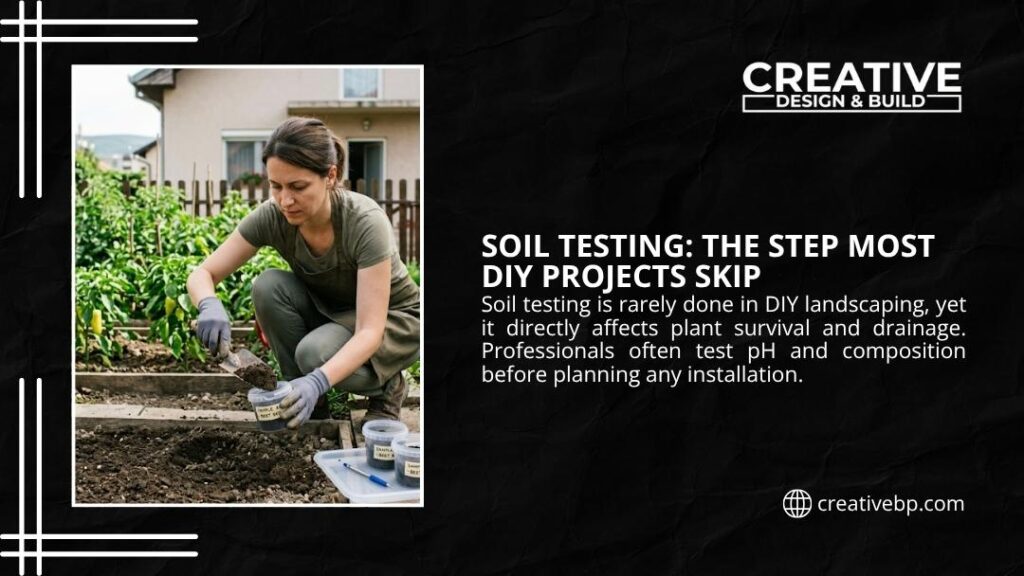
Leveling the ground, figuring out how water moves across the yard, and preparing soil properly aren’t decorative steps. They’re foundational. Miss them, and the rest of the work doesn’t hold the same way.
A lot of people lean on online tutorials. That makes sense. The problem is, those guides are usually broad. They don’t reflect the specific conditions of a particular site. Soil can vary quite a bit from one area to another. Weather patterns shift outcomes. Even drainage behaves differently depending on the slope.
That said, DIY does work in the right situations. Smaller projects, plant beds, minor lawn care, and simple pathways can be handled without much trouble. It’s when the project starts to affect structure or long-term stability that things become less predictable.
What Happens When You Hire a Professional Landscaping Company
When a professional landscaping company steps in, the process doesn’t begin with building. It starts with understanding the site.
They look at elevation, how water flows, and what’s already in place. Those details shape the plan before anything is installed. It’s a different starting point, and it usually prevents issues from showing up later.
With design-build landscaping services, design and construction stay connected. The same team handles both. There’s no handoff between separate parties trying to interpret the same plan differently.
It might not sound like a major distinction, but it tends to reduce revisions and delays. The work moves more smoothly, and the final result feels more cohesive, not pieced together, but planned as a whole.
Cost Breakdown: DIY Landscaping vs Hiring Professional
Upfront cost often drives the initial decision. DIY landscaping generally requires less immediate spending. There’s no labor fee, and materials can be purchased in stages. But cost doesn’t stay fixed once the work begins.
| Factor | DIY Landscaping | Hiring a Professional |
| Initial Cost | Lower upfront (savings on labor) | Higher upfront (materials + labor) |
| Labor Costs | Not included | Included (professional Crew) |
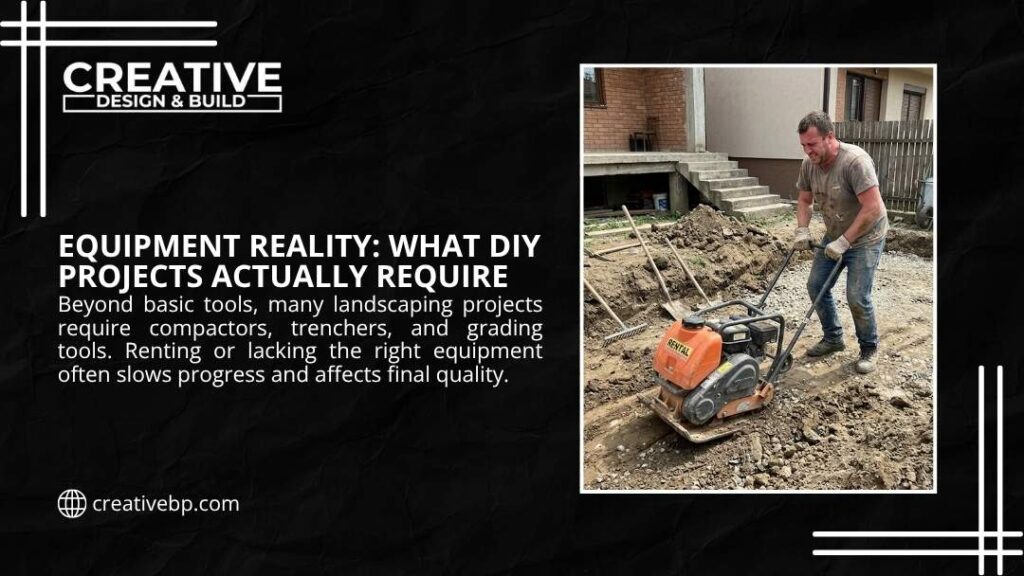
| Equipment | Rental or purchase | Included |
| Risk of Rework | Higher | Lower |
| Long-Term Cost | Variable | More predictable |
Note: DIY is usually preferable for modest, easy undertakings like flower gardens and mulching. Hiring a professional is ultimately safer and more economical for large, intricate, or structural tasks (hardscaping, extensive drainage, retaining walls).
Industry estimates show wide cost ranges for landscaping, often depending on complexity. What those estimates don’t fully capture is how often DIY work requires adjustment. Replacing materials, correcting grading, or redoing sections can shift the overall cost upward. That’s where the initial savings begin to narrow.
Time, Effort, and Skill Level: What Most Homeowners Underestimate
Time is usually the first thing that gets misjudged. Not by a little, but by a lot. Most homeowners begin with a rough estimate. A few weekends, maybe a month. What tends to happen instead is that work stretches. Not because of laziness, but because each step reveals something unexpected, soil that doesn’t behave, levels that aren’t even, materials that don’t sit the way they should.
There’s also the physical side of it. Landscaping isn’t light work. Even smaller diy landscaping tasks demand consistency, lifting, measuring, and adjusting. It adds up faster than expected. To make this clearer, here’s how the two approaches typically differ when you look beyond the surface:
| Factor | DIY Landscaping | Hiring a Professional |
| Time Commitment | Evenings, weekends, and often extended | Scheduled, structured timeline |
| Physical Effort | High, especially for groundwork | Managed by the crew |
| Skill Requirement | Learned during the process | Already established |
| Project Delays | Common due to trial and error | Less frequent |
| Execution Consistency | Varies by experience | Uniform across the project |
What stands out isn’t just the workload, it’s the unpredictability. Professionals don’t eliminate effort, but they organize it. That difference tends to show in both the timeline and the outcome.
Quality and Design Impact on Property Value
Landscape quality affects more than appearance. It influences how the property is perceived and valued.
Data from Virginia Tech suggests that well-planned landscaping can increase home value by up to 12.7%. That increase depends less on the presence of features and more on how those features are integrated.
ROI Comparison
| Aspect | DIY Landscaping | Professional Landscaping |
| Visual Impact | Moderate | Refined |
| Property Value | Limited increase | Higher potential |
| Longevity | Shorter lifespan | Extended lifespan |
| Design Flow | Inconsistent | Unified |
Professional landscapers approach design with continuity. Materials align with the environment. The layout supports function as well as appearance. Over time, that cohesion becomes noticeable.
Hidden Costs Most DIY Landscaping Guides Don’t Talk About
There’s a tendency to focus on visible expenses, materials, tools, and maybe rentals. What slips past most discussions are the costs that show up later. Not immediately. Not during installation. But weeks or months after.
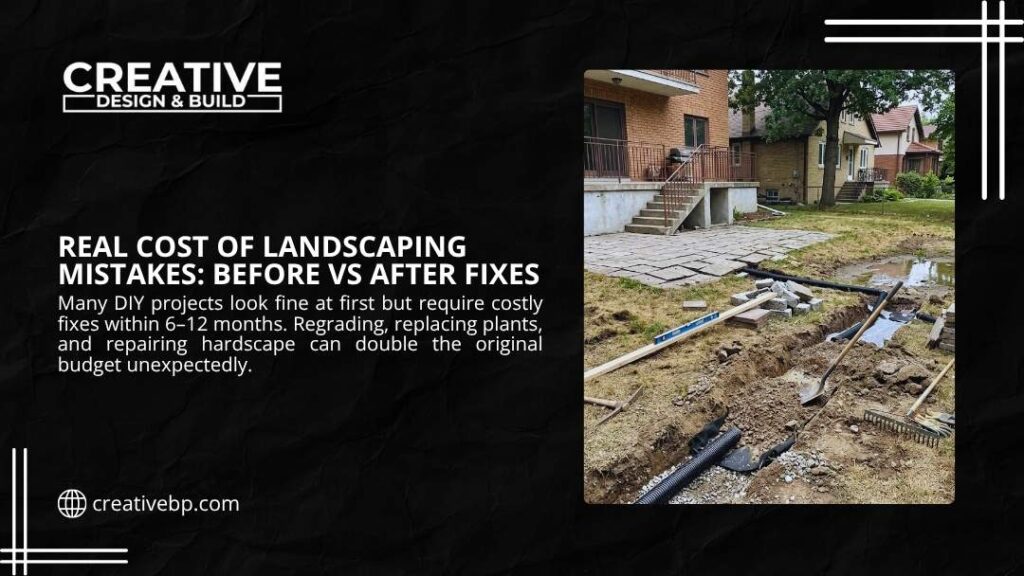
Water doesn’t drain the way it should. Certain areas settle unevenly. Plants fail despite proper care. These aren’t dramatic failures, but they require correction, and that’s where the real cost appears. To put it into perspective, here’s where those overlooked expenses usually come from:
| Issue | Why It Happens | Long-Term Impact |
| Drainage Problems | Improper grading or slope | Water pooling, structural damage |
| Soil Preparation Gaps | Skipped or rushed groundwork | Weak plant growth, instability |
| Material Misuse | Incorrect base or installation | Cracking, shifting surfaces |
| Rework | Trial-and-error approach | Additional labor and materials |
| Tool Inefficiency | Wrong equipment choice | Slower progress, inconsistent results |
These aren’t rare situations. They’re fairly common in projects that evolve without a clear plan. The difficulty is that they don’t always show up right away, which makes them easy to underestimate.
When DIY Landscaping Makes Sense
There are situations where DIY landscaping is not only reasonable, it’s the better choice. Smaller projects tend to benefit from a hands-on approach. Planting beds, seasonal updates, and light lawn care adjustments don’t require structural planning. They allow flexibility, and they can be done gradually.
It also suits homeowners who prefer to stay involved. Some people enjoy the process itself, not just the outcome. For them, the time spent is part of the value.
Budget can play a role as well. When resources are limited, DIY projects offer a way to improve the space in stages rather than all at once. Where things shift is when the project stops being cosmetic. Once layout, drainage, or long-term durability come into play, the advantages of DIY begin to narrow.
When Hiring a Professional Landscaping Company Is the Smarter Move
There’s a noticeable difference between improving a space and building one that holds together over time.
When projects involve multiple elements, hardscaping, grading, planting, and structural features, coordination becomes essential. Without it, each part may work on its own, but not as a whole.
Professional landscapers approach this differently. They don’t treat features as separate additions. Everything is connected: how water moves, how materials age, how the space will be used years later.
Looking into their design process makes that clear. It’s less about quick decisions and more about sequencing, what happens first, what supports it, and what follows. You can also see the difference in real applications by reviewing completed landscaping projects. The consistency isn’t accidental. It comes from planning that accounts for more than just the initial build.
For projects that aim beyond surface improvements, that level of coordination tends to make the difference.
Long-Term Maintenance and Sustainability Considerations
What a landscape looks like at completion isn’t always how it performs over time. DIY landscaping often focuses on the immediate result. The layout looks finished, and the materials are in place. What’s less visible is how that space responds to weather, water, and regular use.
Irrigation, for example, isn’t just about watering plants. It’s about distribution, efficiency, and avoiding over-saturation in certain areas. Without planning, it either falls short or creates new issues.
Material choice plays a similar role. Some surfaces hold up under seasonal changes, others don’t. Without experience, it’s difficult to predict which is which.
Professional landscaping tends to account for these variables earlier. The goal isn’t only to complete the project, but to reduce how much correction it needs later. Over time, that difference becomes more noticeable than the initial appearance.
DIY Landscaping vs Hiring Professional: Side-by-Side Decision Table
At a certain point, the decision becomes less about preference and more about fit. The scope of the project usually makes that clear.
| Situation | Best Choice |
| Minor upgrades | DIY landscaping |
| Full property redesign | Hiring a professional |
| Budget constraints | DIY approach |
| High-end outdoor space | Professional landscapers |
| Limited availability | Hiring a pro |
The table simplifies the decision, but the underlying factor remains the same: complexity. As complexity increases, the benefits of professional involvement tend to outweigh the initial cost difference.
Related Considerations Before Starting Your Landscaping Project
Before committing to either path, a few questions tend to shape the outcome more than expected.
How long will the project realistically take? What level of planning is required before work begins? And how much flexibility is there once it’s underway?
Understanding how landscape design is structured provides a clearer sense of what happens before any physical work starts. It’s often more detailed than homeowners anticipate.
On the construction side, reviewing professional build services helps define what execution actually involves, timelines, sequencing, and coordination between different elements. These aren’t minor details. They influence how smoothly the project moves from idea to completion.
FAQs
Is it worth doing landscaping yourself if I have no experience?
It can be, depending on the scope. For smaller tasks, experience builds as you go. But for larger projects, lack of experience often leads to adjustments later, which can offset the initial savings.
How do I know if my project is too complex for DIY?
A good indicator is whether the project involves grading, drainage, or structural elements. If those are part of the plan, it usually requires a more structured approach.
Why do some DIY landscaping projects fail over time?
Most issues come from what’s beneath the surface, improper base preparation, water flow miscalculations, or material choices that don’t suit the environment.
Can professional landscaping actually reduce maintenance later?
Yes, in many cases it does. Proper planning around irrigation, materials, and layout tends to reduce the need for ongoing adjustments.
Is it possible to start with DIY and later switch to a professional?
That happens quite often. Many homeowners begin independently and bring in professionals once the project becomes more complex than expected.
What should I prioritize if I’m deciding between cost and quality?
It depends on how long you plan to use the space. For short-term improvements, cost may take priority. For long-term use, quality tends to matter more.
Do professionals always use better materials than DIY projects?
Not necessarily better, but more appropriate. Material selection is usually based on durability, climate, and long-term performance rather than just appearance.
How early should I involve a landscaping professional in my project?
Earlier than most expect. Even a brief consultation at the beginning can prevent design or layout issues that are difficult to fix later.
Making the Right Choice for Your Property
DIY landscaping vs hiring professional isn’t about choosing one method over the other universally. It’s about matching the approach to the project.
Smaller tasks can be handled independently without much risk. Larger, integrated designs benefit from planning and execution that account for long-term performance.
Many homeowners begin with DIY and shift direction once complexity increases. That shift usually reflects a change in priorities, from short-term savings to lasting results. If the project involves more than surface-level updates, it may be worth speaking with a landscaping professional or taking time to understand their approach and experience, because in the end, the outcome depends less on how the project starts and more on how well it’s built to last.