
The designer you pick determines almost everything: timeline, budget, and whether the finished yard looks like what you imagined or like a compromise.
Most homeowners figure this out too late. They compare a few quotes, scan a portfolio, and go with the one who seems confident. Six weeks into construction, costs are climbing, and the space looks nothing like the rendering.
This guide covers what actually separates a capable landscape designer from one who only looks good on paper, and how to spot the difference before you sign anything.
How to Choose Landscape Designer: What the Search Results Won’t Tell You
You search for landscape designers near me. You get a list. Everyone’s got a nice website. Everyone has photos of finished patios. The problem: those signals don’t tell you what you actually need to know.
The question that actually predicts how a project goes is this: Does this designer understand how construction works, or just how plans look on a screen?
A designer who produces beautiful concepts but doesn’t account for your site’s drainage, grading realities, or material costs creates a plan that a contractor then revises in the field. That’s where timelines break. That’s where costs you didn’t budget for suddenly appear.
Firms like Creative Design Build Associates are built differently. Their process, what they call build-informed design, means every concept gets pressure-tested against real construction conditions before it ever becomes your final plan. That single difference removes most of the surprises.
The Gap That Quietly Drains Budgets (Most Homeowners Never See It Coming)
Picture this. The designer creates a plan. You approve it. The contractor picks it up and immediately starts making calls. The retaining wall spec doesn’t work with the actual grade, a material is backordered, and the patio footprint ignores the drainage slope.
The plan changes. Costs get added. Timeline shifts. And nobody’s clearly at fault, because the designer and contractor are two separate businesses with two separate interests.
One homeowner we’ve spoken with spent thousands on a design that had to be scrapped before a single shovel hit the ground, because the designer never coordinated with the install team. The plan was genuinely beautiful. It just wasn’t buildable within the agreed budget.
That’s not a rare horror story. It’s a predictable outcome of a disconnected process. When you’re evaluating firms, look at how they describe their workflow. A structured process tells you whether phases are actually connected, or just listed.
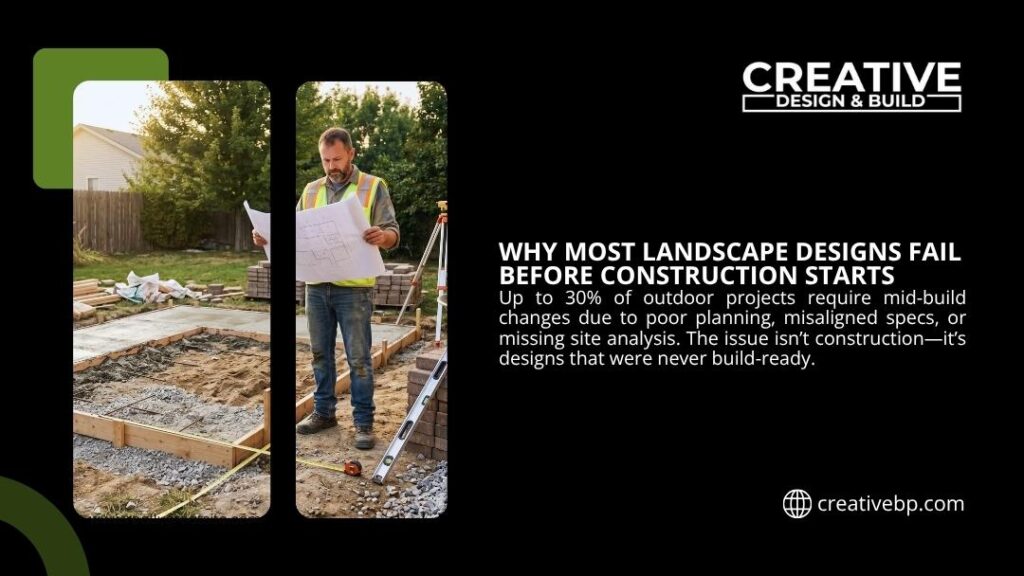
What to Look at Before You Hire Anyone: The Real List
Track record in Similar projects
Years in business are a rough proxy. What you actually need is proof they’ve handled projects similar to yours in scope, a full outdoor living build, a pool integration, and a complex hardscape layout.
A designer who specializes in residential planting plans approaches a patio-pool-outdoor kitchen project completely differently from one who regularly builds these environments. Neither is wrong. They’re just not the same job.
Completed builds, not just renderings
Renderings can make almost anything look great. Completed projects show whether it actually came together that way. When you review a portfolio, focus on material consistency and detail quality, natural stone, high-grade pavers, integrated lighting, and clean transitions. These signal how a designer thinks about durability, not just day-one aesthetics.
Design Process Transparency
Ask any designer to walk you through their process from first call to breaking ground. If the answer’s vague or generic, that’s information.
A real process has defined checkpoints: consultation, concept review, material selection, and construction coordination. Without that structure, decisions get made on the fly, usually at your expense.
Communication Skills and Collaboration Style
Communication problems cause more project failures than technical ones. Ask almost any contractor who’s been brought in to fix something.
The signal isn’t what they say in a first meeting. It’s how much they ask. A designer who spends 40 minutes pitching their aesthetic without asking about your budget, your lifestyle, or how you actually use outdoor space is showing you exactly how the rest of the project will go.
Design-Build vs Separate Contractor Model
When you hire a designer and a contractor separately, you become the coordinator between them. Every miscommunication becomes your phone call to manage. A design-build firm removes that entirely. One team, one point of accountability, one process.
Landscape Designer vs. Landscape Architect: Which One Is Actually Right for You
Understanding the difference between a landscape designer and a landscape architect helps clarify your needs.
| Factor | Landscape Designer | Landscape Architect |
| Cost | Moderate (sized for residential work) | Higher reflects licensing and engineering scope |
| Licensing | Not always required | Licensed professional in every state |
| Scope | Residential design and aesthetics | Structural & large-scale planning |
| Focus | Aesthetics & usability | Engineering & compliance |
| Best For | Outdoor living, patios, pools, planting, full backyards | Large structural builds, municipal approvals, and drainage engineering |
For most homeowners, patios, pools, outdoor kitchens, and backyard transformations, a landscape designer is the right fit. If your project involves significant structural engineering or municipal permitting, you may need a licensed architect.
Questions to Ask Before You Sign Anything
Most homeowners ask too few questions upfront, and the ones they ask aren’t the ones that actually reveal how a project will go. Skip how long you have been in business? Ask these:
| Question | Why It’s the Right Question to Ask |
| Who manages this project once construction starts? | If it’s the contractor, ask who coordinates between them. The designer-builder gap is exactly where most problems are born. |
| Can I visit a completed project, in person, not photos? | Photos are curated. A site visit tells you whether the design actually held up, the materials, craftsmanship, and how it weathered. |
| What’s a realistic timeline, not your best case? | How they answer this tells you how they’ll handle expectation management throughout the entire project. |
| Which materials do you recommend, and specifically why? | Vague answers mean generic specs. Material-specific reasoning, especially for Michigan conditions, reflects real expertise. |
| How do you handle scope changes mid-project? | This is where hidden costs live. A clearly defined process protects you. ‘We’ll figure it out’ does not. |
These questions go beyond surface-level checks. They help uncover how the designer thinks, communicates, and manages projects.
The Design-Build Process: What’s Actually Happening at Each Stage
A well-defined process creates consistency. Without it, projects rely on improvisation.
| Stage | What’s Happening And Why It Matters |
| Initial Consultation | Goals, site conditions, budget, constraints. A good designer asks more than they talk at this stage. |
| Concept Design | Layout, flow, and focal points are grounded in what the site can actually support, not just what looks good on paper. |
| Detailed Planning | Materials finalized, quantities confirmed, budget locked in. Fewer decisions are made on the fly later. |
| Construction Coordination | In a design-build model, this isn’t a handoff between strangers; it’s the same team continuing the same conversation. |
| Execution and Oversight | Build proceeds with active management. Problems caught early, before concrete gets poured. |
A structured Creative Design Build Associates design service ensures that each stage flows smoothly into the next without disruption.
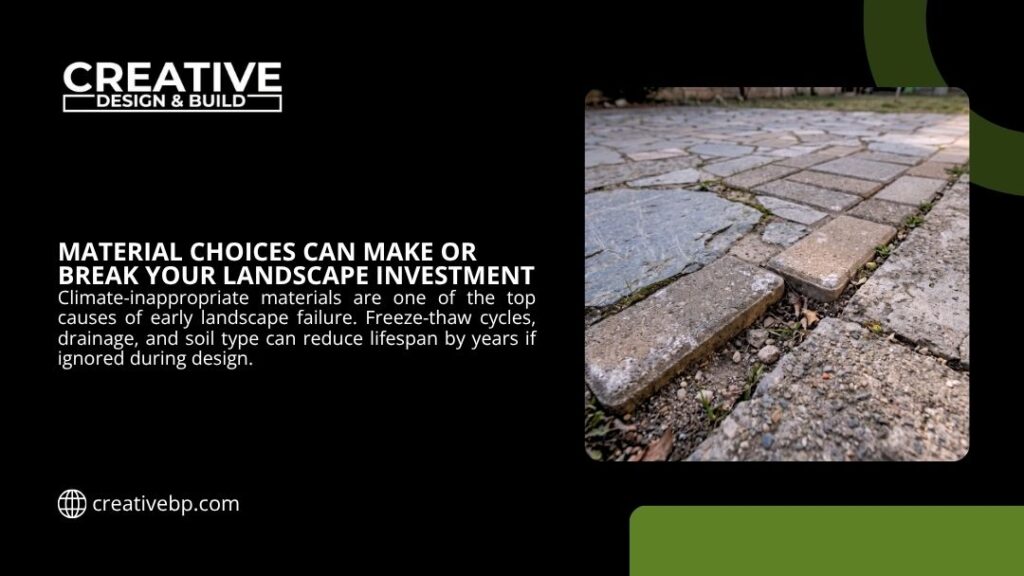
What Does It Actually Cost to Hire a Landscape Designer
Everyone searches for this, and nobody gets a straight answer. Cost remains one of the most searched aspects when exploring how to choose landscape designer. This is where many homeowners start asking, ” Is it worth hiring a landscape designer or just managing the project themselves? Here it is:
| Project Type | Typical Range | What’s Driving That Number |
| Design only (basic) | $1,500 – $5,000 | Site analysis, concept, and layout plan. Doesn’t include construction. |
| Full outdoor living plan | $5,000 – $15,000 | Multiple features, detailed specs, and coordination drawings. |
| Design-build (full) | $15,000 – $200,000+ | End-to-end, design integrated with construction. Range depends heavily on scope and material choices. |
Costs vary based on project size, materials, and complexity. The number that matters more than any quote: a cheaper design that fails during construction, or has to be redesigned, will cost more than the right investment upfront. Every time.
Is Hiring a Landscape Designer Worth It
Yes. With the right firm. And that qualifier is carrying a lot of weight. A bad landscape designer costs you twice, once when you pay them, and again when you fix what went wrong. A good one pays for itself over the years of a space that actually functions, survives Michigan winters, and adds real value when you sell.
The National Association of Realtors has documented that 97% of real estate professionals say curb appeal directly impacts buyer attraction. That’s not a soft stat about aesthetics, it’s about what buyers will pay for a property that looks finished versus one that still needs work. Understanding how to choose a landscape designer who can deliver that ROI is what separates a smart investment from a costly mistake.
Firms that consistently deliver on this, such as Creative Design Build Associates, are the clearest example in Southeast Michigan, which don’t separate design from construction. Every concept gets tested against what it’ll actually take to build it. That’s what prevents the expensive redesign cycle that quietly eats budgets.
So yes. Worth it. But only when you choose based on process and accountability, not just who has the most polished portfolio page.
Red Flags to Watch Before You Sign: Most Are Easy to Miss
None of these looks like an obvious problem in a first meeting. That’s exactly what makes them expensive.
| Red Flag | What It’s Telling You | What Happens Next |
| No clearly defined process | They’re improvising, not managing | Scope creep, surprise costs, missed milestones |
| Portfolio is all renders, no finished work | They can’t show it, or don’t want to | Built result won’t match the approved plan |
| Pricing is vague or heavily range-based | Hidden costs are already part of the plan | Budget overruns that feel like surprises but aren’t |
| The designer steps back when construction starts | No accountability once building begins | Design intent gets lost between the plan and the ground |
| Promises an unusually fast timeline | Telling you what you want to hear | Delays or rushed work showing up as failures in year 2 |
| Weak or generic material knowledge | Specs aren’t climate-specific or site-specific | Short lifespan, early failures, higher maintenance costs |
| Communication issues at the first meeting | That’s them at their most prepared and motivated | Much larger issues once money and pressure are both on the table |
Two or three of these together? Walk away. The wrong designer doesn’t just affect your budget; it affects how you feel about your own yard every time you step outside.
DIY Landscaping vs. Hiring a Professional: The Honest Version
DIY works fine for smaller things. A planting bed. Mulch. A container setup on a deck. Once you’re into grading, drainage, structural hardscape, or anything that needs to survive a Michigan freeze-thaw cycle more than twice, the math changes fast.
| Factor | DIY landscaping | Professional landscaping |
| Upfront cost | Lower | Higher, but scoped and predictable |
| Long-term cost | Often higher due to repairs, rework, and replacements | More controlled when done right the first time |
| Design quality | Limited by what you know to ask for | Site-specific, intentional, cohesive |
| Material selection | Trial and error usually involves hardware store defaults | Climate-appropriate, durability-driven |
| Time commitment | High, and almost always longer than expected | Managed for you |
| Outcome reliability | Unpredictable | Consistent with the right firm |
The homeowners who end up most frustrated aren’t the ones who hired badly. They’re the ones who started DIY landscaping, got halfway through, realized the scope was much bigger than expected, and then had to hire someone to fix and finish it. Starting over from a partially built project costs more than starting right.
How to Find the Right Designer Near You, Without Wasting Consultations
Start local. Not because local is always better, but because a designer who knows Southeast Michigan knows your soil type, knows how freeze-thaw cycles affect material selection, knows which plants actually survive here and which ones look great in the nursery in May and die by March.
Searching for landscape designers near me is step one. Evaluating what comes back takes more. Start with completed project portfolios, not review counts. Stars tell you clients were satisfied. Finished work tells you whether the design was actually delivered.
Schedule two or three consultations. Pay close attention to how they run the meeting, are they asking about how you use outdoor space, or pitching their style before you’ve said much?
Ask specifically about Michigan conditions, freeze-thaw cycle, clay soil drainage, and plant hardiness zones. Generic answers mean generic specs.
Ask for a project reference similar in scope to yours. Photos are okay; a site visit is better.
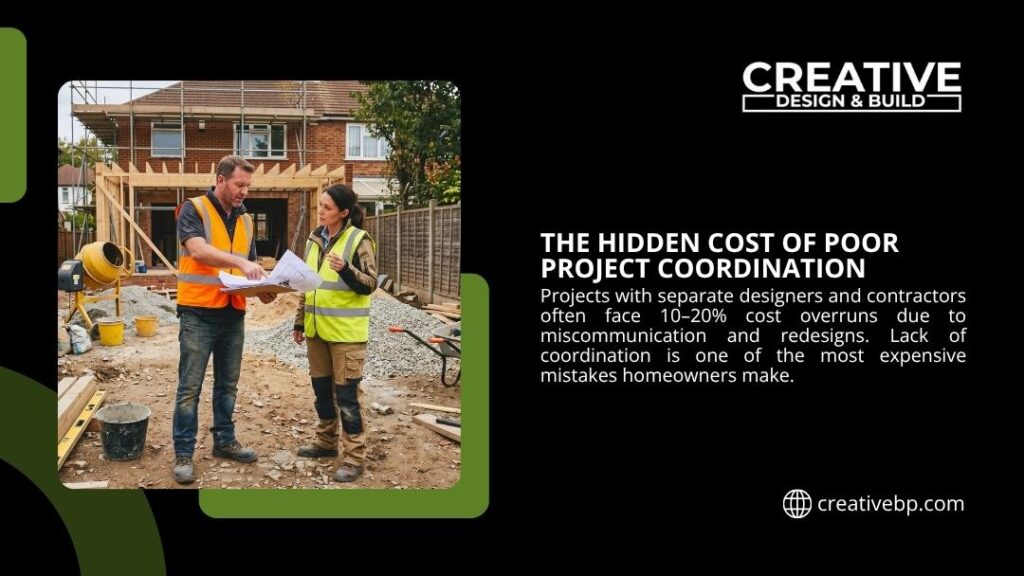
Why One Team Outperforms Two (Even When Two Looks Cheaper at the Start)
Here’s the thing about hiring a designer and a contractor separately: you end up with two teams that have two different sets of priorities.
The designer wants their plan executed exactly as drawn. The contractor wants to build efficiently within their margin. These interests collide constantly, and the client absorbs the difference in change orders, timeline revisions, and compromises to the original design.
One coordinated team eliminates that. At Creative Design Build Associates, designers and builders are working from the same site visit, the same material specs, and the same project file, from day one. Grading realities, construction sequencing, and material availability all get factored into the design before it’s finalized. Not after.
That’s not a minor efficiency gain. That’s the difference between a project that finishes on budget and one that doesn’t.
Choosing the Right Partner for Your Landscape Project
You can evaluate portfolios. Compare quotes. Ask every question in the guide. But at some point, usually after two or three consultations, the decision becomes simpler: do you trust this team with your property and your money for the next several months?
What that trust actually looks like in practice:
- They give you bad news when it exists, not just updates when things are going well
- They recommend what’s right for your site, not what’s easiest to sell
- They’ve done this before, at this scale, and they can show you the results
- They own the outcome, not just the design
The gap between a yard that looks finished and one that actually feels right lives in judgment. You want a designer who has both the skill and the judgment. Those are different things.
FAQs: How to Choose Landscape Designer
Should I hire a landscape designer or go straight to a contractor?
If your project has any layout, flow, or design component, where a patio sits, how different features connect, and what the planting plan is, start with a designer. Contractors execute a plan. They can’t create one for you, and they shouldn’t have to.
What’s the first step after deciding I want a landscape designer?
Schedule a consultation, but go in prepared. Know your rough budget range, have a sense of how you actually use outdoor space, and bring reference photos. A good designer takes it from there. A bad one will pitch for 45 minutes without asking you a single question.
Can a landscape designer also handle construction?
Some can. Design-build firms like Creative Design Build Associates handle both under one roof, which means the plan was designed with construction in mind from the start, not handed off for someone else to figure out.
How long does the whole process take?
The design phase alone runs from two weeks to two months, depending on complexity. Construction varies more; a patio project might take four to six weeks; a full outdoor transformation can run a full construction season. Build more time into your expectations than feels necessary. Rushing design creates construction problems.
What should I look for in a portfolio?
Completed projects, not concept renders. Specifically: material quality, consistency across different builds, and whether designs feel like a unified vision or a collection of things that don’t quite belong together.
Garden designer or landscape designer; is there a real difference?
Yes. A garden designer focuses on planting beds, species selection, and seasonal interest. A landscape designer handles the full picture: layout, hardscape, structure, drainage, and how every element works together as an outdoor environment. For a real transformation, you want the latter.
What happens if I pick the wrong designer?
Best case: a result that’s close to what you wanted but not quite, and some frustrating delays. Worst case: a project redesigned mid-construction, significant cost overruns, and a finished space you never fully enjoy. It’s fixable. But it’s always expensive, and it always takes longer than starting right would have.
Start the Right Way; Before the Project Starts
Most mistakes in landscaping don’t happen during construction; they happen before the first shovel hits the ground. Choosing the wrong designer can lead to redesigns, delays, and costs that spiral far beyond the original plan.
That’s why reviewing a proven design-build portfolio like Creative Design Build Associates can help you avoid costly design mistakes before your project even begins. Their integrated approach ensures your outdoor space isn’t just designed well, but built exactly as intended.
If you’re serious about getting it right the first time, take the time to evaluate experience, process, and real-world results. Because once construction starts, fixing the wrong decision becomes far more expensive than making the right one upfront.