
Landscape design is far more than arranging plants or laying a patio. It combines planning, engineering, aesthetics, and long-term usability into one cohesive outdoor experience. For homeowners, understanding what does landscape design include helps avoid costly mistakes and ensures every square foot of outdoor space works both visually and functionally.
What is Landscape Design?
Most people Google what does landscape design include expecting a list. A few plants, maybe a patio, call it done. That’s not how it works. And honestly, that gap between what people expect and what design actually involves is exactly why so many outdoor projects end up looking decent for a year and then falling apart.
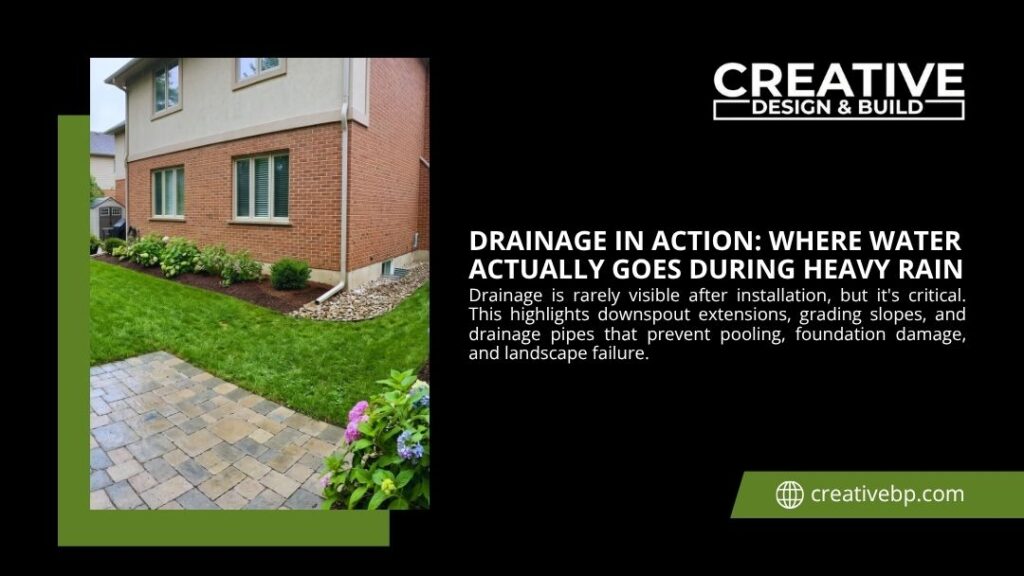
Landscape design is a system. Drainage, grading, soil conditions, freeze-thaw cycles, plant survivability, traffic patterns, all of it has to work together. When it doesn’t, you get pooling water, shifting walkways, and plants that die two winters in a row.
In Southeast Michigan, especially, where the ground freezes hard and thaws unpredictably, this isn’t theoretical. It’s what separates a landscape that holds up from one that needs constant fixes.
Creative Design Build Associates handles both design and construction under one roof, which means the person who draws the plan is accountable for whether it actually works in the ground. That matters more than most homeowners realize going in.
What Is Landscape Design and Why Does It Matter
Landscape design is the organized plan for how an outdoor space looks, functions, and behaves year-round. Not just where the shrubs go. Not just which pavers look nice. The whole system, how rainwater drains off the property, which plants will genuinely survive a Michigan winter without annual replacement, and where a patio should sit so it gets evening shade in August.
According to the American Society of Landscape Architects, professionally designed landscapes can increase property value by 15% to 20%, especially when outdoor living features are integrated into the layout.
And it’s not just about resale. A study cited by the National Association of Realtors found that well-designed outdoor spaces significantly improve homeowner satisfaction and daily usability.
But here’s what that stat doesn’t tell you: poorly executed outdoor spaces can drag value down just as fast. Water damage to foundations. Retaining walls that shift. Plants that were never right for the zone. Planning isn’t optional. It’s the whole point.
What Does Landscape Design Include: The Core Elements
Softscape Elements (Living Features)
Softscape refers to all living components in a designed landscape. This includes plants, trees, shrubs, lawns, and seasonal plantings. These elements shape the mood of the space and influence maintenance needs.
In Southeast Michigan, plant selection isn’t decorative; it’s structural. You need plants that can handle -10°F in February and 90°F in July without someone babying them every season. A thoughtful plan here cuts your maintenance bill significantly over five years and prevents the constant replacement cycle that drives homeowners crazy.
A skilled designer selects plants based on climate, soil, and long-term growth patterns. Instead of filling space randomly, they create layered planting that adds depth and continuity. This is where landscape designers create environments that feel natural yet intentional.
Hardscape Elements (Structural Features)
Hardscape includes all non-living structures such as patios, walkways, retaining walls, and driveways. These elements define how people move through the space and how areas connect.
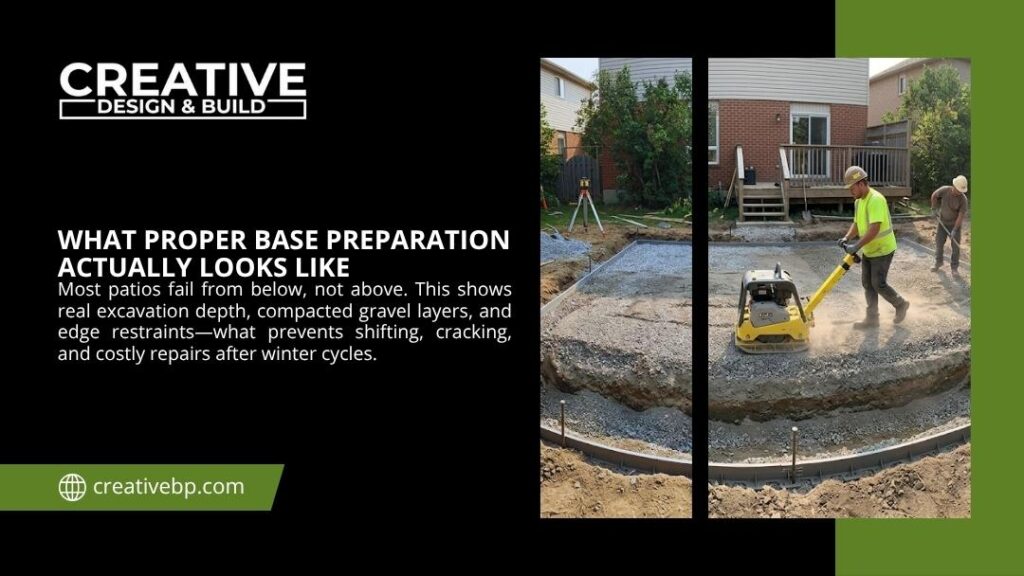
Material choice matters enormously here, especially in Michigan. Bluestone, natural stone, and high-grade concrete pavers all handle freeze-thaw cycles far better than cheaper alternatives. The budget options tend to look fine for 18 months, then start cracking, heaving, and causing drainage problems. This is where the structural investment either pays off long-term or creates a cycle of repairs.
Here’s what that looks like in practice. A homeowner in Troy installs a standard concrete patio to save upfront cost. Within two winters, the slab cracks due to freeze-thaw movement. The replacement ends up costing more than installing proper base preparation and premium pavers from the start. That’s where material decisions stop being aesthetic and start becoming financial.
Water and Architectural Features
Water features, pools, fire pits, pergolas, a sports court, and outdoor kitchens add character and usability. These features often act as focal points, anchoring the overall design.
This is where the project stops being a yard upgrade and starts being an extension of how you actually live. These elements are what make people stop leaving their property to find entertainment, and they’re also what gets used every weekend when they’re done right.
They’re also where under-planning creates the biggest problems. An outdoor kitchen with no drainage plan. A pergola that wasn’t engineered for Michigan snow loads. A fire feature that’s 4 feet from a wood fence. The details matter.
Softscape vs Hardscape Comparison
| Feature Type | Purpose | Examples | Maintenance Level |
| Softscape | Adds life, seasonal variation, and natural texture | Plants, trees, lawns | Moderate to High |
| Hardscape | Provides structure and long-term usability | Patios, walkways, retaining walls | Low to Moderate |
How the Landscape Design Planning Process Actually Works
This is the part most homeowners skip asking about, and then regret once construction starts. Understanding the process helps clarify what does landscape design includes beyond surface-level visuals.
Step 1: Site Analysis and Evaluation: Every project begins with analyzing soil, drainage, and sunlight. Without this step, even the best designs fail. A designer who skips this step is guessing, and you’ll pay for those guesses later.
Step 2: Concept Development: This is where the vision takes shape. Designers develop a layout that includes focal points, circulation paths, gathering zones, screening areas, and space usage. Good concept work also factors in how the space will be used, not just how it’ll look in photos. This is where the landscape design concept takes shape.
Step 3: Design Finalization: Plans are refined using detailed drawings or 3D renderings. Materials, finishes, and layout details are finalized before construction begins. At this stage, you should know almost exactly what the finished project looks like before anyone touches the ground.
Step 4: Installation and Execution: Execution involves coordinating contractors, managing timelines, and ensuring design accuracy. Homeowners who review a structured design-to-build process through platforms like Creative Design Build Associates often gain better clarity on how each phase connects, reducing surprises during construction.
What Does a Landscape Designer Actually Do on a Real Project
When people ask what does a landscape designer do, they often think only of drawings. The actual job is quite a bit more involved.
A landscape designer handles site assessment, layout planning, material specification, plant selection, contractor coordination between trades, and budget alignment, often simultaneously. They translate ideas into buildable plans. This ensures the finished space reflects the original vision without compromise.
On larger projects, they’re also managing permits and coordinating with engineers on drainage or structural elements.
In a design-build firm, that scope extends further. The designer also acts as a project manager, keeping timelines on track, resolving unexpected challenges, and making real-time decisions that keep the project on track. This is why hiring a professional landscape designer often results in smoother execution compared to fragmented contractor-led projects.
It’s the difference between someone who hands you a plan and walks away, and someone accountable for the finished result. Established design-build firms often manage projects ranging from single patios to full-scale outdoor living environments exceeding six figures, which requires coordination across multiple trades and long-term planning beyond basic design work.
Landscape Design Principles That Shape Every Project
Behind every successful outdoor space are design principles that guide structure and flow. These include balance, proportion, rhythm, and unity. These sound like art school concepts, but they’re the reason some finished yards feel instantly right, and others feel like a collection of stuff that doesn’t quite go together.
Balance doesn’t mean symmetry. It means visual weight is distributed so your eye moves through the space without getting stuck. Rhythm creates movement through repetition.
Unity means the materials, plants, and structures feel like they belong to the same project, not like three separate contractors each made independent decisions.
When these principles are applied well, they create a sense of harmony, turning separate elements into a single, functional environment. When they’re ignored, even expensive materials look like they were installed randomly.
Landscape Design Checklist (What Should Be Included)
A complete answer to what does landscape design include must involve a structured checklist that covers every stage of the project.
| Phase | Key Tasks | Outcome |
| Planning | Site analysis, drainage evaluation | Clear understanding of conditions |
| Design | Layout creation, material selection | Defined project vision |
| Pre-Build | Budgeting, scheduling | Organized execution plan |
| Build | Installation, coordination | Completed functional space |
| Post-Completion | Maintenance planning | Long-term durability |
Questions to Ask a Landscape Designer Before Hiring
Choosing the right professional requires asking the right questions. Most homeowners skip this and regret it. Here are the ones that actually matter:
- Who manages the project once construction starts, and can I reach them directly?
- How do you handle changes mid-project, and what’s the cost process for those?
- What materials are you recommending and why specifically for Michigan’s climate?
- Have you done projects similar to mine in scale and scope? Can I see them?
- What does your timeline look like, realistically, not optimistically?
If the answers are vague, that’s your signal. A contractor who can’t answer those questions clearly before you sign won’t get clearer once your deposit clears. Platforms like Creative Design Build Associates can help homeowners make informed decisions before committing.
Landscape Designer vs. Landscape Architect: Does the Difference Matter for You?
Usually yes, but not for the reason people think. A landscape architect is licensed and often handles larger commercial or municipal projects with significant engineering components, retaining systems, grading on complex sites, and large public spaces.
A landscape designer typically focuses on residential projects: the layout, the materials, the planting plan, and the outdoor living elements. For most homeowner projects, this is the right fit.
What matters more than the title is whether they can show you completed projects similar to yours, and whether they’re accountable for construction, not just design.
Understanding this difference becomes important when evaluating project complexity and budget expectations. Cost comparisons often show variation depending on project scale and technical requirements.
How Much Does Landscape Design Cost?
Cost varies widely depending on project size, materials, and complexity. Small projects may involve basic planting and patio work, while larger projects include pools, structures, and extensive hardscape.
For instance, a standalone patio project in Southeast Michigan can start anywhere from $15,000 to $30,000, depending on size and materials. A full outdoor living space, patio, landscaping, fire feature, and possibly a pool is a significantly larger investment. Projects that combine multiple elements regularly reach $75,000–$200,000+.
Material choices drive cost more than anything else. Premium stone versus concrete pavers. Pool finish options. Lighting systems. Outdoor kitchen appliances.
The honest framing: a well-designed, professionally executed outdoor space is not cheap. But it’s also not a cost; it’s a return on the equity of your property and years of actual use. Understanding cost factors helps homeowners avoid underestimating the investment required for a complete design.
Does Landscape Design Add Value to Your Home
Yes. Genuinely. Finished outdoor spaces are one of the few home improvements that buyers respond to immediately. An outdoor kitchen, a well-designed patio, and mature landscaping aren’t invisible on a listing. They show up in how buyers feel when they walk through the property.
The caveat: half-done projects or poorly executed designs can have the opposite effect. A decaying deck, overgrown foundation plantings, or a cracked patio signal deferred maintenance to buyers.
This is why many homeowners explore whether design improvements contribute to ROI before starting a project.
DIY Landscaping vs Hiring a Professional
Choosing between handling a project yourself and bringing in experts often comes down to more than cost. It’s about time, long-term durability, and how complex the project really is.
| Factor | DIY Landscaping | Hiring a Professional |
| Cost | Lower upfront expenses, but risk of costly mistakes later | Higher initial investment with better long-term value |
| Design Quality | Limited by personal knowledge and tools | Professionally planned layouts with cohesive design |
| Time Commitment | Requires significant personal time and effort | Managed timelines with faster completion |
| Material Selection | Trial-and-error approach, often less durable | Access to premium materials suited to the climate |
| Project Complexity | Best for small, simple tasks | Handles complex builds like patios, pools, and grading |
| Maintenance Outcome | May require frequent fixes or adjustments | Designed for long-term performance and efficiency |
In many cases, smaller upgrades can work as DIY projects, but once structural elements or drainage come into play, professional involvement tends to deliver more reliable results over time.
What a Real Landscape Design Transformation Looks Like
Here’s a scenario that happens more often than you’d think. Another common situation: a family invests in a large backyard but rarely uses it. No defined seating. No shade. No focal point. After a structured design plan, even adding a simple pergola, a defined patio zone, and lighting can shift the space from unused lawn to the most active part of the property. Same space, completely different behavior.
A homeowner in Rochester Hills has an acre of usable backyard that’s been open lawn for fifteen years. It’s fine, but nobody actually spends time out there. It’s not a destination, it’s just outside.
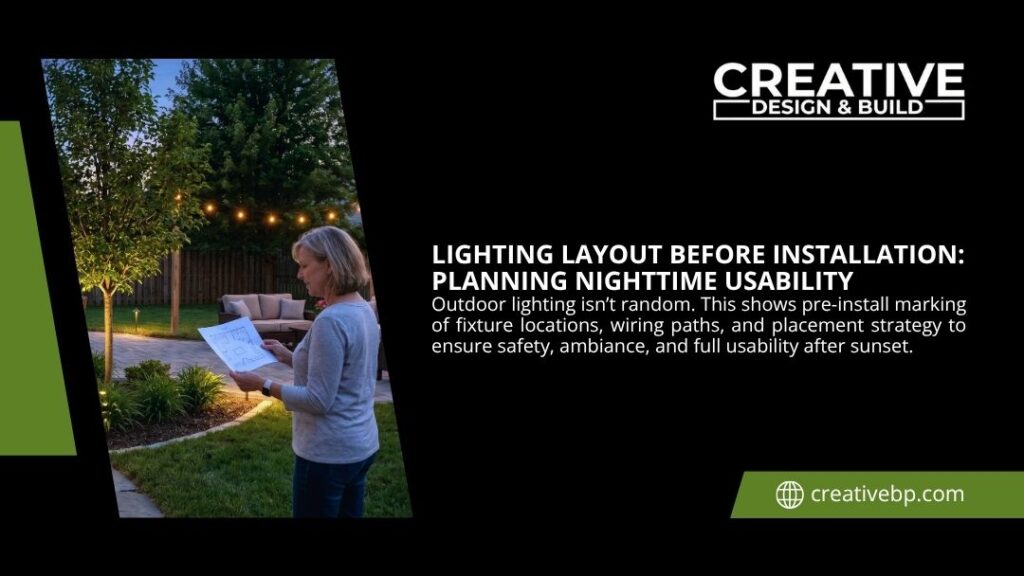
After a design-build process: a defined bluestone patio with a pergola overhead, a natural gas fire pit as the anchor feature, structured planting along the perimeter that provides privacy without blocking light, and a lighting system that makes the space usable past 9 PM.
Same square footage. Completely different property. People spend weekend evenings out there now instead of inside. Creative Design Build Associates’ portfolio has documented examples across project types and scales.
Common Mistakes in Landscape Design (That Cost Real Money)
The ones that show up most often in Michigan are ignoring drainage. Water accumulation damages both softscape and hardscape over time. Another common mistake involves poor plant selection, where plants fail to thrive due to climate mismatch.
Lack of planning also leads to disjointed layouts, where elements feel disconnected rather than unified. Skipping the maintenance plan. Install-day care requirements and year-two care requirements are completely different. Not knowing this leads to unnecessary plant loss.
How Long Does Landscape Design Take
The design phase alone, depending on complexity, can take anywhere from two weeks to two months. That includes site analysis, concept work, revisions, and material finalization.
Construction timelines vary by scope. A patio and planting project might run four to six weeks. A full outdoor transformation with pool, structures, and landscape could be a full construction season.
Most projects take 8–16 weeks from design approval to completion. That’s honest, not optimistic. Rushing any phase creates problems downstream. The design-to-construction handoff, especially if the plan isn’t fully resolved before ground breaks, you’ll pay for decisions made on the fly.
Bringing It All Together for Your Outdoor Space
Understanding what landscape design includes changes how you approach the whole project. It shifts you from thinking about individual features to thinking about a complete outdoor environment.
The difference between a yard that looks like an upgrade and one that actually functions better, year-round, isn’t the budget; it’s whether someone thought through the full system before anything got built.
If you’re in Southeast Michigan and you’re planning something, whether that’s a patio, a pool, a complete outdoor overhaul, or something you haven’t fully defined yet, the starting point is a conversation with a team that handles design and construction together.
If you’re considering a transformation, working with an experienced team like Creative Design Build Associates can help ensure every element, from planning to execution, aligns with your vision and delivers long-term value. Start today and call us now!