
Weeds between pavers are one of the most common complaints from homeowners with brick or stone surfaces.
If you have a patio, driveway, or walkway and notice green growth pushing through the joints, knowing how to stop weeds growing between pavers starts with understanding why they appear in the first place and then choosing the right long-term solution.
This guide covers the root causes, the most effective treatments, and the preventive steps that keep your paver surface clean for years.
Why Weeds Keep Coming Back Between Pavers
Weeds do not grow from inside the paver itself. They grow from seeds that settle into the joint sand between pavers, carried by wind, birds, or foot traffic. Once a seed finds moisture and a small amount of organic material in the joint, it germinates.
The real problem is that standard jointing sand is loose and porous. It holds moisture well, which is exactly what weed seeds need to take root. Over time, as the sand settles or washes away, the gaps widen and give weeds even more space to establish themselves.
If your paver patio is sinking or the joints are uneven, weeds tend to be worse. Displaced sand creates larger voids that collect debris and moisture faster.
That kind of structural shift is worth addressing before any weed treatment, because surface fixes alone will not last long on an unstable base.
The Most Effective Ways to Stop Weeds Growing Between Pavers
There is no single method that works for every situation. The right approach depends on the severity of the weed growth, the age of your paver installation, and whether you want a short-term fix or a long-term solution.
Polymeric Sand: The Most Reliable Prevention Method
Polymeric sand is the most widely recommended solution for how to stop weeds growing between pavers at the joint level. It contains fine silica particles and a binding agent that activates when wet.
Once it cures, the sand hardens and creates a firm joint that resists weed growth, insect activity, and joint erosion.
| Feature | Standard Sand | Polymeric Sand |
| Weed resistance | Low | High |
| Water erosion resistance | Low | High |
| Ant and insect resistance | Low | Moderate to high |
| Joint stability | Moderate | High |
| Cost | Low | Moderate |
| Application difficulty | Easy | Moderate |
The application process requires dry conditions, proper compaction, and careful clean-up of any residue from the paver surface before wetting. Applied incorrectly, it can leave a haze on the pavers.
For larger or more complex installations, professional application gives the best results.
Paver Sealers: A Second Layer of Defense
Sealing your pavers does not directly kill weeds, but it significantly reduces the conditions that allow them to grow. A quality sealer closes the pores of the paver surface and hardens the joint sand, making it harder for seeds to settle and take hold.
Many homeowners ask whether they need to seal their paver patio at all, the short answer is that sealing extends the life of the surface, preserves color, and when combined with polymeric sand, creates a strong barrier against organic growth.
For patios in Southeast Michigan where freeze-thaw cycles are common, sealing also protects against moisture penetration and joint deterioration over winter.
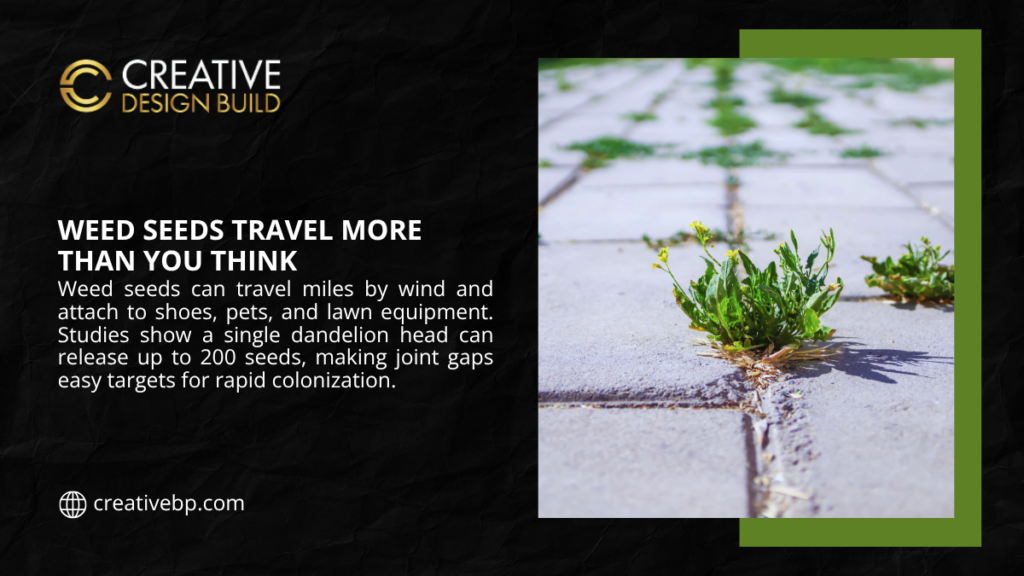
Removing Existing Weeds Before Treatment
Any prevention method works best on a clean surface. Before applying polymeric sand or sealer, existing weeds need to be fully removed, roots included.
| Removal Method | Effectiveness | Best For |
| Manual pulling | High (if roots removed) | Small areas, isolated weeds |
| Pressure washing | Moderate | Clearing joints before re-sanding |
| Boiling water | Moderate | Organic, chemical-free approach |
| White vinegar (acetic acid) | Moderate | Surface weeds, light infestations |
| Commercial herbicide | High | Severe or widespread growth |
A pressure washer set at the right angle clears joints effectively and removes old sand, which then needs to be replaced. This step is often skipped, but it matters.
Applying polymeric sand over old, weed-contaminated joints defeats the purpose entirely.
White vinegar works as a contact herbicide on young weeds. It does not sterilize the soil permanently, but it is a practical option for homeowners who prefer to avoid chemical products near gardens or water features.
Landscape Fabric: Useful in Some Cases, Not All
Landscape fabric placed beneath the paver base during installation can reduce weed pressure from below. It does not, however, address the main source of paver weeds, which is seeds settling into joints from above.
For this reason, fabric is most useful as a part of the original installation rather than a retrofit solution. If you are building a new patio or walkway, a well-prepared base with compacted gravel, proper drainage, and landscape fabric gives a strong foundation that reduces weed infiltration over time.
How long paver patios last is largely determined by the quality of this base preparation. A surface installed with poor drainage or inadequate compaction will shift and crack over time, creating more joint gaps and more opportunity for weed growth.
How to Stop Weeds Growing Between Pavers in Cold Climates
Michigan homeowners face a specific challenge. Freeze-thaw cycles through winter expand and contract the ground, which shifts pavers, widens joints, and pushes out sand. By spring, the joints that were tight in October are loose and open.
The best pavers for cold climate Michigan installations are those with high density and low water absorption.
Dense pavers resist cracking from frost and hold their position better through seasonal movement, which means joints stay tighter and weeds have less opportunity to establish.
| Winter Factor | Impact on Weeds | Solution |
| Freeze-thaw movement | Widens joints, loosens sand | Annual joint inspection and top-up |
| Snow melt moisture | Activates dormant seeds | Re-apply polymeric sand in spring |
| De-icing salts | Degrades standard sand | Use salt-resistant polymeric products |
| Debris accumulation | Organic matter feeds seeds | Clear joints before winter sets in |
A spring inspection after the ground fully thaws is good practice. Any joints that have lost sand should be topped up before the growing season gives weeds the window they need.
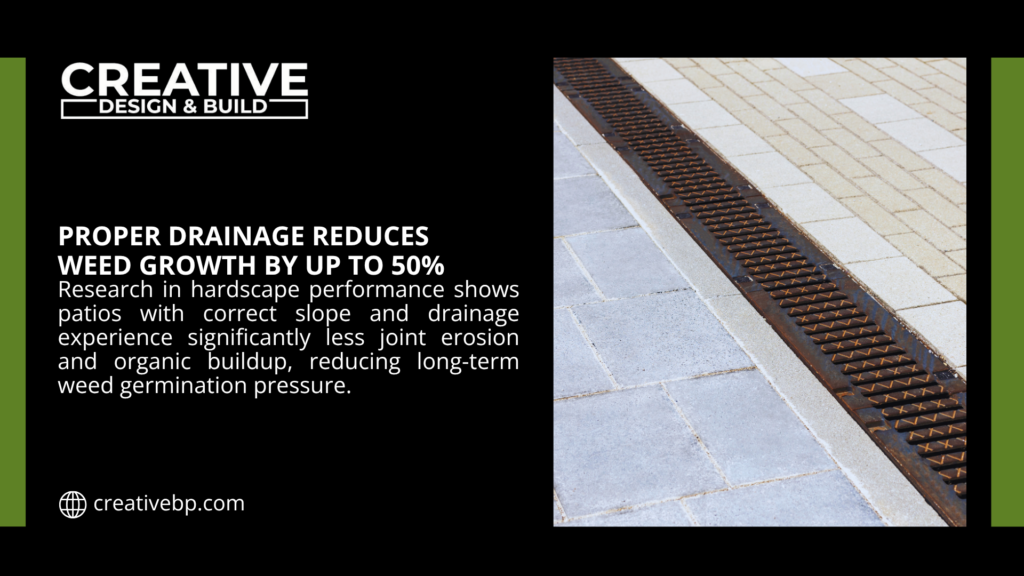
Long-Term Maintenance: What Actually Works
Weed control between pavers is not a one-time task. It requires a basic annual routine that keeps joints full, sealed, and free of debris.
The most practical schedule looks like this:
- Late spring: inspect joints, remove any growth, top up with polymeric sand where needed
- Early summer: apply or re-apply sealer if the surface is due (typically every 3 to 5 years)
- Autumn: clear fallen leaves and organic debris before they decompose in the joints
- Pre-winter: check for any frost damage or shifted sections that need attention
This kind of routine keeps how to stop weeds growing between pavers from becoming a recurring annual problem. Homeowners who skip two or three seasons tend to face significantly more work when they eventually address it.
With experience in residential hardscape projects across Southeast Michigan, the team at Creative Design Build Associates sees the same pattern: surfaces that received proper installation and basic seasonal care look sharp after ten years, while neglected ones require partial rebuilds. Homeowners who want professional help with how to stop weeds growing between pavers and ongoing seasonal upkeep can explore a managed maintenance program.
Good materials and consistent upkeep are always less expensive than repair work.
Frequently Asked Questions
Does vinegar permanently kill weeds between pavers?
White vinegar kills the visible growth on contact but does not sterilize the soil or prevent new seeds from germinating. It works well as a repeatable organic treatment for light infestations, but it is not a permanent fix on its own.
How often should I re-apply polymeric sand?
In most residential applications, polymeric sand lasts between 3 and 5 years before it needs to be refreshed. In high-traffic areas or on surfaces exposed to heavy frost cycles, inspection every 2 years is a practical approach.
Can I apply polymeric sand myself?
Yes, in smaller areas. The process requires dry weather, thorough joint cleaning, careful compaction, and precise water activation. Mistakes during application can leave residue on the paver surface that is difficult to remove. For large patios or complex layouts, professional application is worth the investment.
Will sealing my pavers stop weeds completely?
Sealing alone will not stop weeds completely, but combined with polymeric sand it significantly reduces the conditions that allow growth. Sealing hardens the joint material and makes the surface less hospitable to seed germination.
What is the best long-term solution for weed control between pavers?
The combination of polymeric sand in the joints, a quality sealer on the surface, and a basic annual maintenance routine gives the best long-term results. No single product replaces consistent upkeep.
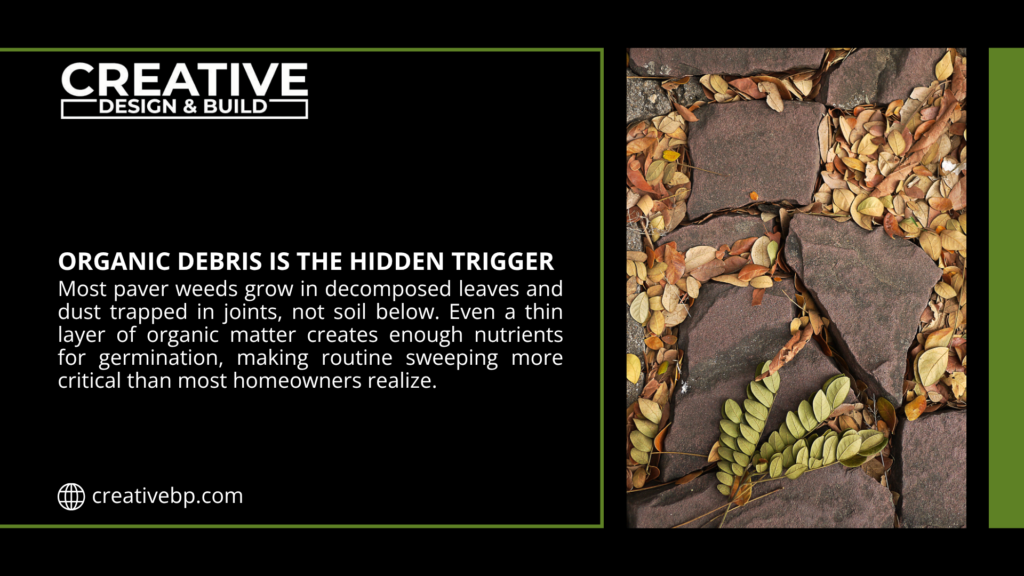
Final Note
How to stop weeds growing between pavers comes down to three things: removing what is already there, sealing the joints so new seeds cannot take hold, and keeping up with basic seasonal maintenance.
The right materials make a real difference. Polymeric sand and a quality sealer are not optional extras, they are the foundation of a surface that stays clean and structurally sound over time.
For homeowners in Southeast Michigan dealing with recurring weed problems or paver surfaces that have shifted and settled, the most practical step is a professional assessment.
Creative Design Build Associates works on residential and commercial hardscape projects across the region, and the advice is always the same: fix the base, fill the joints properly, and the surface takes care of itself.