
Michigan winters test every outdoor surface. Temperatures swing from freezing nights to warmer days, water seeps into cracks, and frost pushes material apart from below.
The best pavers for cold climate in Michigan need to handle these extreme conditions year after year without cracking, shifting, or deteriorating.
This guide shows you which paver materials actually survive Michigan’s brutal freeze-thaw cycles. You’ll learn why some pavers crack after one winter while others last 30 years and what technical specifications matter most.
Why Michigan’s Climate Destroys Most Pavers
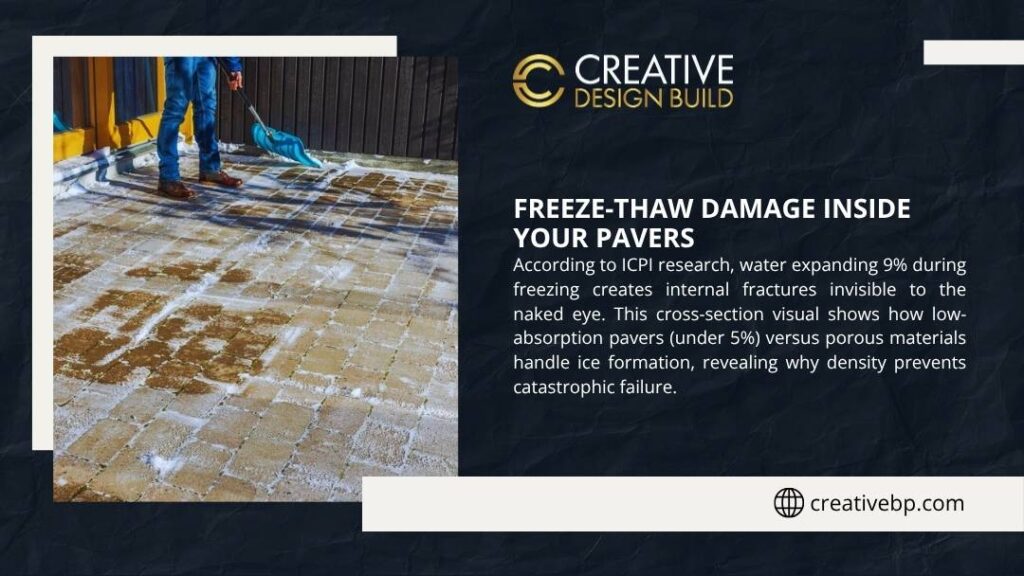
Michigan experiences 80 to 100 freeze-thaw cycles each winter season. Water penetrates paver surfaces and bases during warmer periods. When temperatures drop below 32°F, that water expands by roughly 9% as it freezes.
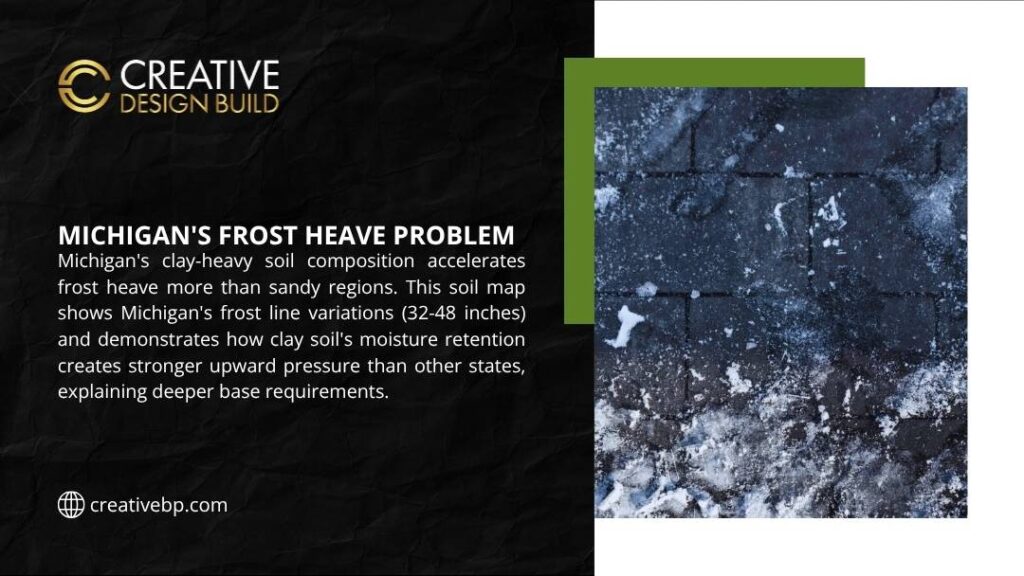
The frost line in Michigan extends 42 inches deep in most regions. Ground freezing at this depth creates upward pressure called frost heave. Pavers installed without proper base preparation shift and crack when frost heave pushes them out of position each winter.
Poor drainage makes the problem worse. Water trapped under pavers has nowhere to go when it freezes. The pressure builds until something breaks. This explains why paver patio sinking becomes a common question after Michigan homeowners survive their first winter.
| Michigan Climate Challenge | Impact on Pavers | Solution Required |
| 80-100 freeze-thaw cycles | Internal cracking from ice expansion | Low absorption rate materials |
| 42-inch frost line | Heave and shifting | Deep gravel base, proper drainage |
| Heavy snow load | Surface damage, salt exposure | Dense, hard materials |
| Temperature swings | Thermal expansion stress | Proper joint spacing |
Best Paver Materials for Cold Climate in Michigan Winters
Concrete Pavers for Freeze-Thaw Resistance
Quality concrete pavers handle Michigan winters better than most alternatives when they meet specific technical standards. The absorption rate determines how much water enters the paver. Materials absorbing less than 5% of their weight in water resist freeze-thaw damage effectively.
High-strength concrete pavers with 8,000 PSI compressive strength or higher perform well in cold climates. These dense pavers allow minimal water penetration. The manufacturing process creates a tight internal structure that leaves little room for water to collect and freeze.
From our experience with residential projects across Southeast Michigan, concrete pavers from reputable manufacturers consistently survive 25 to 30 years when properly installed. The key factors include:
- Absorption rate below 5% of weight
- Compressive strength of 8,000 PSI minimum
- Proper curing time before installation (28 days minimum)
- Full-depth color vs. surface-only pigment
Color stability matters in freeze-thaw climates. Surface-colored pavers can flake or fade as freeze-thaw cycles stress the top layer. Full-depth colored pavers maintain appearance even if minor surface damage occurs.
Clay Brick Pavers: Natural Freeze Protection
Clay brick pavers represent one of the best pavers for freeze thaw climates. The manufacturing process fires clay at temperatures exceeding 2,000°F. This extreme heat creates a virtually non-porous material with absorption rates often below 3%.
Brick pavers rated SW (Severe Weather) meet ASTM C902 standards for freeze-thaw resistance. These pavers handle repeated freeze-thaw cycles without deterioration.
The SW rating requires specific absorption and compressive strength minimums that ensure long-term performance.
Michigan projects using SW-rated brick paving typically last 40 to 50 years with minimal maintenance.
The material naturally resists salt damage better than concrete, which matters for areas near driveways or walkways where de-icing products get used.
| Paver Material | Absorption Rate | Compressive Strength | Expected Lifespan | Freeze-Thaw Rating |
| Concrete (high-quality) | 3-5% | 8,000+ PSI | 25-30 years | Excellent |
| Clay Brick (SW-rated) | 1-3% | 8,000+ PSI | 40-50 years | Superior |
| Natural Stone (dense) | 0.5-2% | 15,000+ PSI | 50+ years | Superior |
| Concrete (standard) | 7-10% | 4,000-6,000 PSI | 10-15 years | Poor |
Natural Stone Pavers for Maximum Durability
Dense natural stones like granite, bluestone, and certain limestones handle Michigan winters exceptionally well. These materials formed under extreme geological pressure, creating tight molecular structures that resist water absorption.
Granite pavers absorb less than 1% of their weight in water. This makes them nearly immune to freeze-thaw damage. The material’s hardness also resists surface wear from snow shovels, ice melt, and foot traffic.
Bluestone offers good freeze-thaw resistance when properly selected. Dense, thermal bluestone works well in cold climates. However, some bluestone varieties absorb more water and perform poorly in freeze-thaw conditions.
Understanding bluestone patio vs pavers durability helps when comparing natural stone options for Michigan projects.
Softer stones like sandstone or porous limestone fail quickly in Michigan. These materials absorb too much water and crack within one or two winters.
Stick with dense, low-absorption natural stones for cold climate applications.
Technical Specifications That Matter
Water Absorption Rate Requirements
The ASTM C140 test measures how much water a paver absorbs. Cold weather pavers for Michigan should absorb less than 5% of their weight. Premium options stay below 3%. This specification matters more than any other factor for freeze-thaw survival.
Test results appear on technical data sheets from manufacturers. Request these documents before purchasing pavers. Contractors who skip this step often install materials that fail after the first winter.
Some manufacturers list absorption rates while others provide density or porosity measurements. All three relate to how much water enters the material. Higher density and lower porosity mean less water absorption.
Compressive Strength Standards
Compressive strength measures how much weight a paver handles before crushing. Michigan’s freeze-thaw cycles create internal stress similar to external weight. Pavers with compressive strength below 6,000 PSI often fail in cold climates.
Look for materials rated at 8,000 PSI or higher. This provides a safety margin for extreme freeze-thaw events. The extra strength also helps pavers survive snow plow edges and repeated de-icing salt exposure.
Proper Installation Base Requirements
Even the best patio pavers for Michigan winters fail without proper base preparation. The base must extend below the 42-inch frost line to prevent heave. A typical Michigan paver installation requires:
- 42+ inches total depth from finished surface to undisturbed soil
- 6 to 8 inches of compacted crushed gravel base
- 1 inch of leveling sand
- Proper slope for drainage (2% minimum)
- Edge restraints to prevent lateral movement
Contractors who shortcut base preparation doom even premium pavers to failure. The paver patio cost per square foot in Michigan reflects these deeper excavation and base requirements compared to warmer climates.
Common Paver Types That Fail in Michigan
- Thin Porcelain and Ceramic Pavers
Porcelain pavers work well in warm climates but crack frequently in Michigan winters. The material’s brittle nature makes it vulnerable to thermal shock when temperatures swing rapidly. Water that penetrates mounting systems freezes and breaks adhesive bonds.
Ceramic pavers share similar problems. The glaze can crack separate from the base material during freeze-thaw cycles. Surface water seeps into these cracks and causes progressive damage each winter.
- Standard-Grade Concrete Pavers
Budget concrete pavers with absorption rates above 7% fail quickly in freeze-thaw conditions. These materials cost less because manufacturers use lower-grade aggregates and shorter curing times. The savings disappear when homeowners replace cracked pavers after two or three years.
Standard pavers rated at 4,000 to 6,000 PSI lack the strength for Michigan’s conditions. Internal stress from repeated freezing cracks these materials even when external loads stay low.
- Flagstone with High Absorption
Some flagstone varieties absorb 8% to 12% of their weight in water. These soft stones crack and flake during freeze-thaw cycles. The irregular thickness common in flagstone also makes proper installation difficult, which compounds freeze-thaw problems.
Reclaimed or salvaged pavers sometimes carry hidden damage. Hairline cracks invisible to the eye allow water penetration. These materials often fail during their first Michigan winter despite appearing solid initially.
How Installation Quality Affects Performance
Drainage System Integration
Proper drainage removes water before it freezes. Pavers installed over compacted gravel bases with good slope shed water quickly. Systems without adequate drainage trap water that turns into ice and damages materials.
French drains, channel drains, or proper grading direct water away from paver surfaces. The investment in drainage prevents freeze-thaw damage regardless of paver material quality.
Joint Sand Selection
Polymeric sand resists washout and prevents water accumulation in joints. Standard sand washes away and leaves gaps where water collects. That water freezes and pushes pavers apart.
Joint width also matters. Joints sized at 1/8 to 1/4 inch allow for thermal expansion. Tight joints without expansion room crack pavers when materials expand during temperature changes.
Seasonal Maintenance Requirements
Michigan pavers need regular maintenance to maximize lifespan. Remove debris that holds moisture against surfaces. Apply sealant every 2 to 3 years to enhance water resistance. Address small issues before they become major problems.
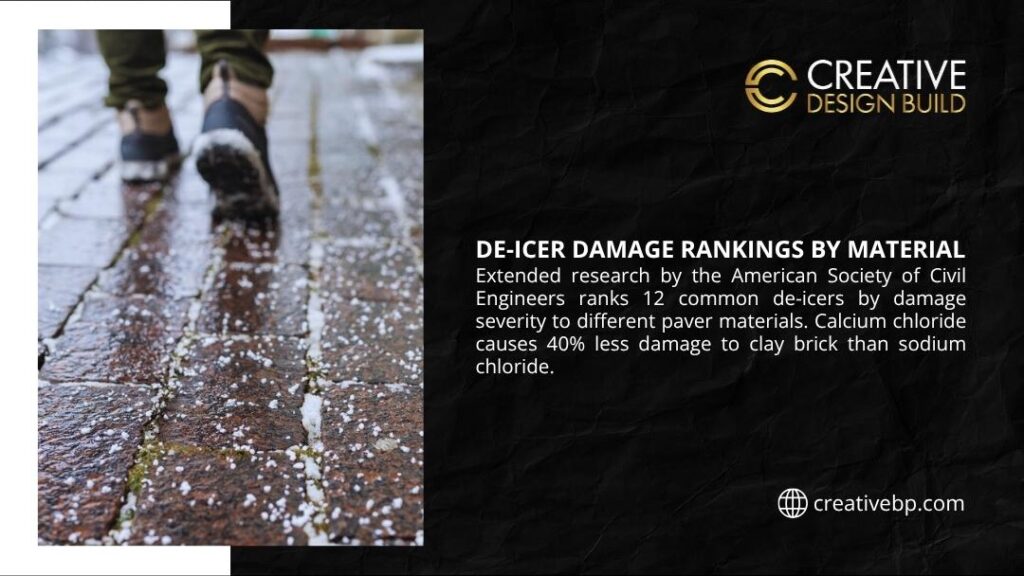
Winter hardscape maintenance tips include avoiding metal shovels that chip surfaces and using sand instead of harsh chemical de-icers. Calcium chloride de-icers cause less damage than sodium chloride products.
Cost Comparison of Freeze-Resistant Pavers
Premium pavers cost more upfront but deliver better value over time. A concrete paver patio might cost $8 to $12 per square foot for materials that last 25 years. Standard pavers at $4 to $6 per square foot require replacement after 10 to 15 years.
| Paver Type | Total Initial | Expected Lifespan |
| Premium Concrete | $18-$26 | 25-30 years |
| SW Clay Brick | $20-$28 | 40-50 years |
| Dense Natural Stone | $24-$34 | 50+ years |
| Standard Concrete | $12-$18 | 10-15 years |
Clay brick and natural stone deliver lower cost per year despite higher initial prices. The extended lifespan and reduced replacement frequency offset the premium material costs.
Durable pavers for cold climates also maintain property value better than materials requiring frequent replacement. Homeowners avoid the disruption and expense of tearing out failed patios every decade.
Top Recommendations from Michigan Projects
From our work with clients across Southeast Michigan, these materials consistently perform well:
For budget-conscious projects:
- High-strength concrete pavers with 8,000+ PSI rating and sub-5% absorption rates
- Interlocking designs that resist shifting
- Earth-tone colors that hide minor wear
For maximum longevity:
- SW-rated clay brick pavers in traditional or tumbled finishes
- Dense granite or thermal bluestone for high-traffic areas
- Professional installation with proper base depth and drainage
For aesthetic flexibility:
- Concrete pavers with full-depth color in modern shapes and sizes
- Mixed materials combining brick borders with concrete fields
- Natural stone accents with concrete paver backgrounds
The best choice balances budget, aesthetic preferences, and expected usage patterns. All options require proper installation to achieve their rated lifespan.
Frequently Asked Questions About the Best Pavers for Cold Climate in Michigan
What makes some pavers better for cold climates than others?
Water absorption rate determines freeze-thaw resistance. Pavers absorbing less than 5% of their weight in water handle repeated freezing and thawing. Dense materials with high compressive strength (8,000+ PSI) resist internal stress from ice expansion.
Do concrete pavers crack in Michigan winters?
Standard concrete pavers with absorption rates above 7% often crack during freeze-thaw cycles. Premium concrete pavers engineered for cold climates survive Michigan winters when properly installed. Look for 8,000+ PSI compressive strength and absorption below 5%.
Are clay brick pavers worth the extra cost in Michigan?
SW-rated clay brick pavers last 40 to 50 years in Michigan compared to 25 to 30 years for premium concrete. The material naturally resists salt damage and requires less maintenance.
Can natural stone pavers handle Michigan snow and ice?
Dense natural stones like granite and thermal bluestone excel in Michigan winters. These materials absorb less than 2% water and resist freeze-thaw damage. Avoid softer stones like sandstone or porous limestone.
Freeze-Resistant Pavers: Final Recommendations
Material selection makes the difference between patios that last decades and those requiring replacement after a few winters. Focus on technical specifications rather than appearance alone. Absorption rates below 5% and compressive strength above 8,000 PSI ensure freeze-thaw survival.
Installation quality matters as much as material choice. Proper base depth, drainage systems, and joint preparation protect your investment. Creative Design Build Associates specializes in cold-climate paver installations that meet Michigan’s demanding requirements.
The right pavers handle freeze-thaw cycles, snow loads, and de-icing salt exposure while maintaining their appearance for 25 to 50 years. Invest in materials and installation methods proven to work in Michigan’s climate rather than repairing or replacing failed surfaces every few years.
Contact Creative Design Build Associates today to discuss your project and select paver materials engineered to survive Michigan winters. Our team brings decades of experience with cold-climate installations to ensure your outdoor space performs beautifully year after year.