
A small yard isn’t a limitation, it’s a design puzzle with a clear answer. Plan a tight Metro Detroit lot well and it can feel roomier, work harder, and cost less to keep up than a wide-open lawn. Here’s a repeatable process, from the first measurement to the final plant, tuned for the compact yards common across Oakland County.
What Counts as a Small Backyard?
By a loose rule of thumb, anything under about 500 square feet of usable space reads as small, though proportion matters more than the number. A narrow strip beside a two-story home can feel small at 700 square feet, while a well-planned 300-square-foot courtyard feels generous.
Before you sketch a single bed, the University of Florida IFAS extension recommends a close look at your site conditions, sun, soil, and slope, because scale and existing conditions shape every later choice. A tight footprint also plays to your advantage on cost: there’s less ground to cover, so a budget stretches further. Small often outperforms large on both function and upkeep.
How to Design a Small Backyard Step by Step
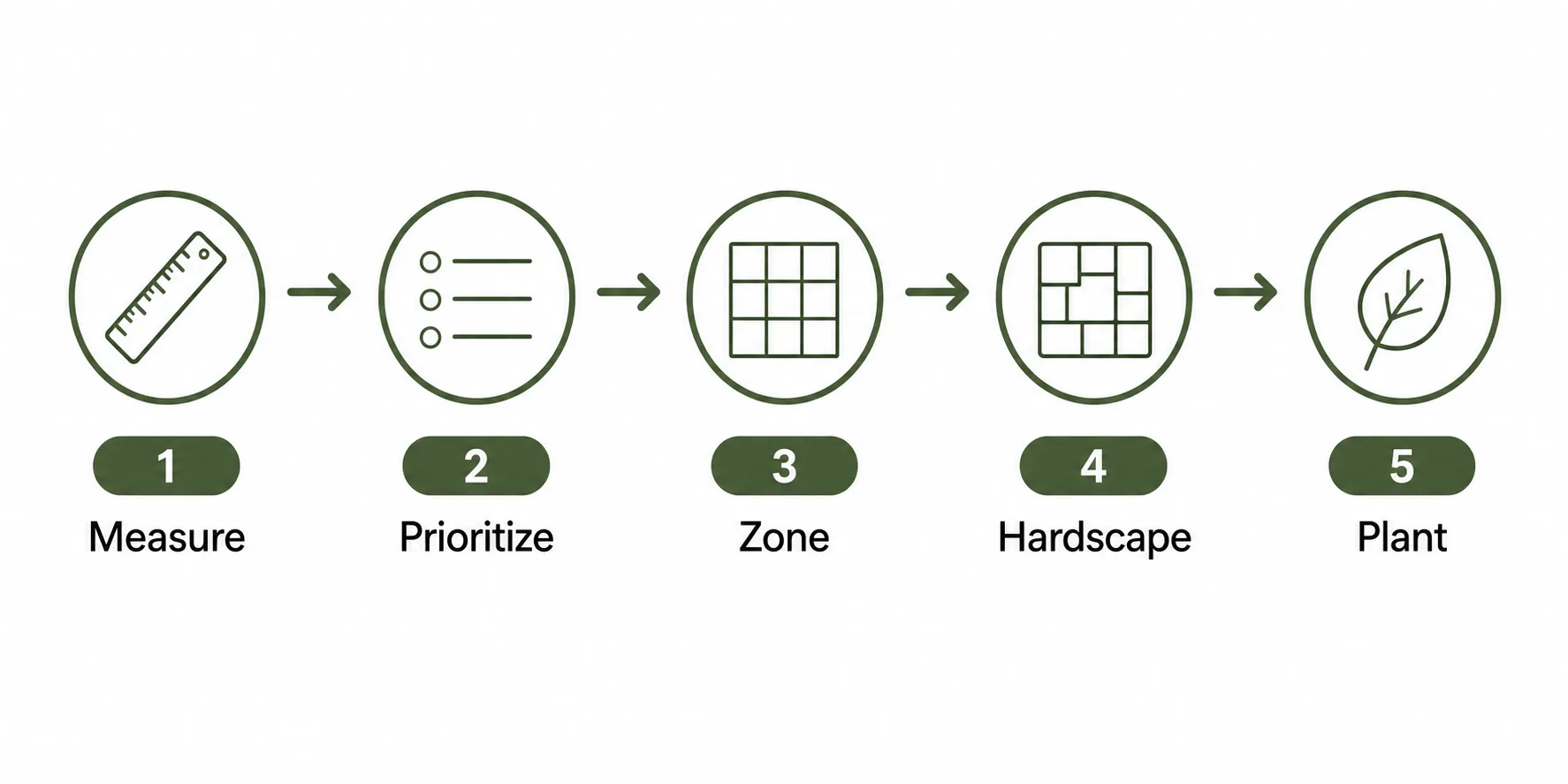
The order of work matters. Most tacky results start with a trip to the garden center before any plan exists. These five steps keep it on track.
| Step | What you decide | Common mistake to avoid |
|---|---|---|
| 1. Measure and map | Sun path, drainage, sightlines, property lines | Guessing dimensions instead of measuring |
| 2. Set priorities | Dining, lounging, play, or garden | Trying to fit all four in one small yard |
| 3. Zone the layout | Where each activity lives and how you move between them | No clear paths, so the yard feels cramped |
| 4. Choose hardscape | Patio, pavers, borders as the backbone | Skipping the base and buying furniture first |
| 5. Layer plants | Height, texture, and color to soften edges | Overplanting until nothing has room to grow |
Strong zoning is the heart of good design, a principle echoed in the NC State Extension landscape design handbook, which puts function ahead of decoration. Tricky lots make it matter more. We documented that on a walkout patio project on a challenging sloped lot, where topography and a sewer easement drove every layout decision.
Start With a Functional Layout, Not Decorations
Zone the space around how you actually live outside. Keep paths wide enough for two people to pass, and give the yard one clear focal point, a fire feature, a specimen tree, a water bowl. When one team runs the full process, those zones connect cleanly instead of fighting each other.
The Rule of 3 in Landscaping
The rule of 3 keeps a small yard calm rather than busy. Plant in odd numbers, hold your materials to three main types, and layer in threes: height, texture, and tone. A layout that repeats one paver, one warm stone, and a single accent metal will always feel more settled than one juggling six competing finishes.
Small Backyard Landscaping Ideas That Maximize Space
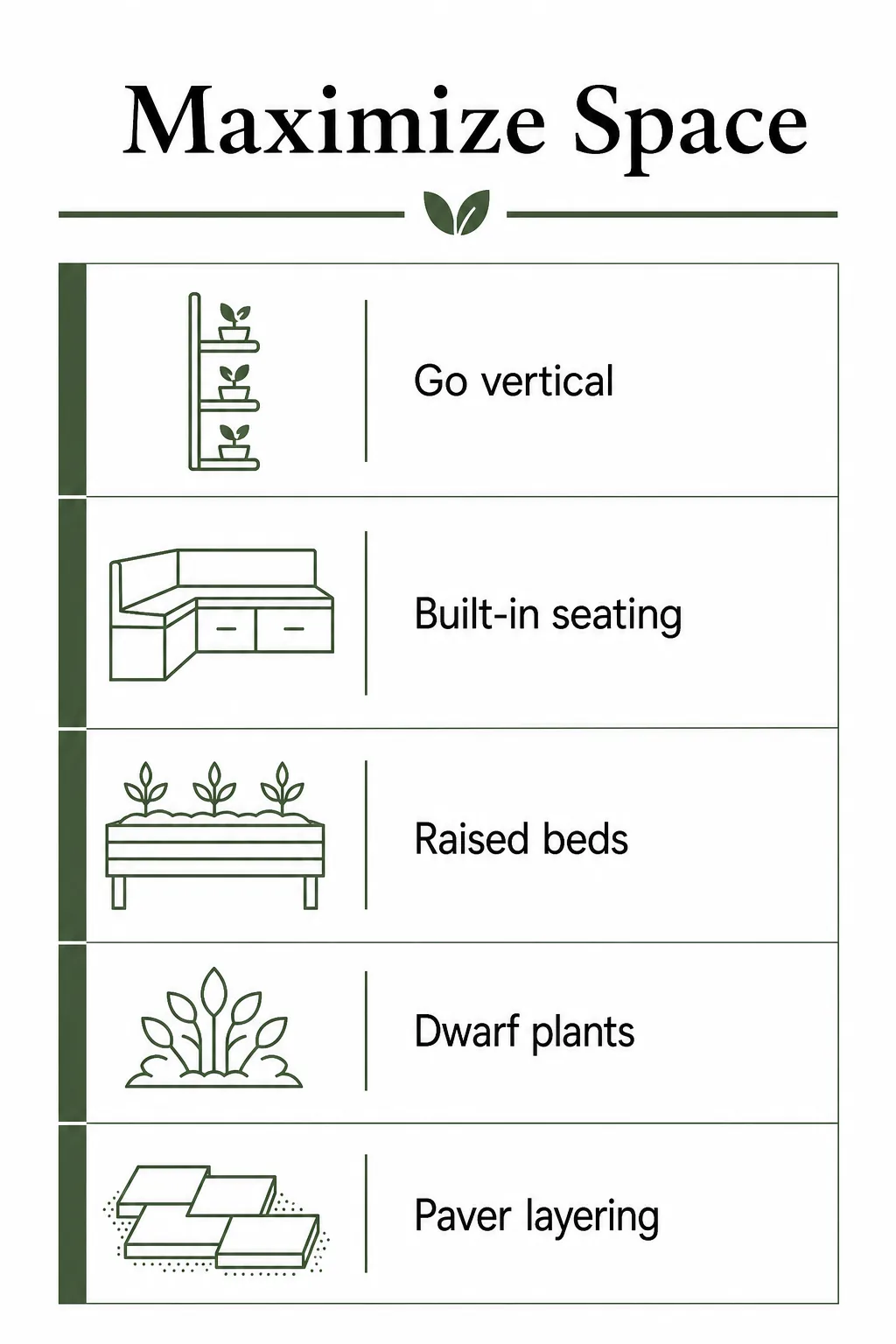
Small yards reward vertical thinking and dual-purpose pieces. Usable outdoor space also supports wellbeing, a link a cross-sectional study on residential yard access explores.
| Idea | Why it works in a small yard | Upkeep level |
|---|---|---|
| Go vertical with wall planters and trellises | Frees the floor, adds green without footprint | Low to medium |
| Multi-functional or built-in seating | Storage plus seating in one footprint | Low |
| Container and raised beds | Portable, tidy, easy to reach | Medium |
| Dwarf and low-maintenance plants | Right-sized growth, less pruning | Low |
| Hardscape layering with pavers and borders | Defines zones, holds up in Michigan winters | Low |
These moves suit tight lots across Oakland County, from a shady courtyard to a sunny patio. Most start with a paved base and one focal element, the same approach behind an outdoor kitchen and fire pit built as a social focal point.
How to Design a Small Backyard With No Grass
No-grass yards cut mowing to zero and fit low-maintenance goals. Gravel drains well and reads casual, pavers give a clean finish and hold value, groundcover fills gaps between stones, and artificial turf offers a soft look without the watering. A hardscape-forward plan still feels alive when planted borders and containers do the softening.
Small Backyard Design on a Budget
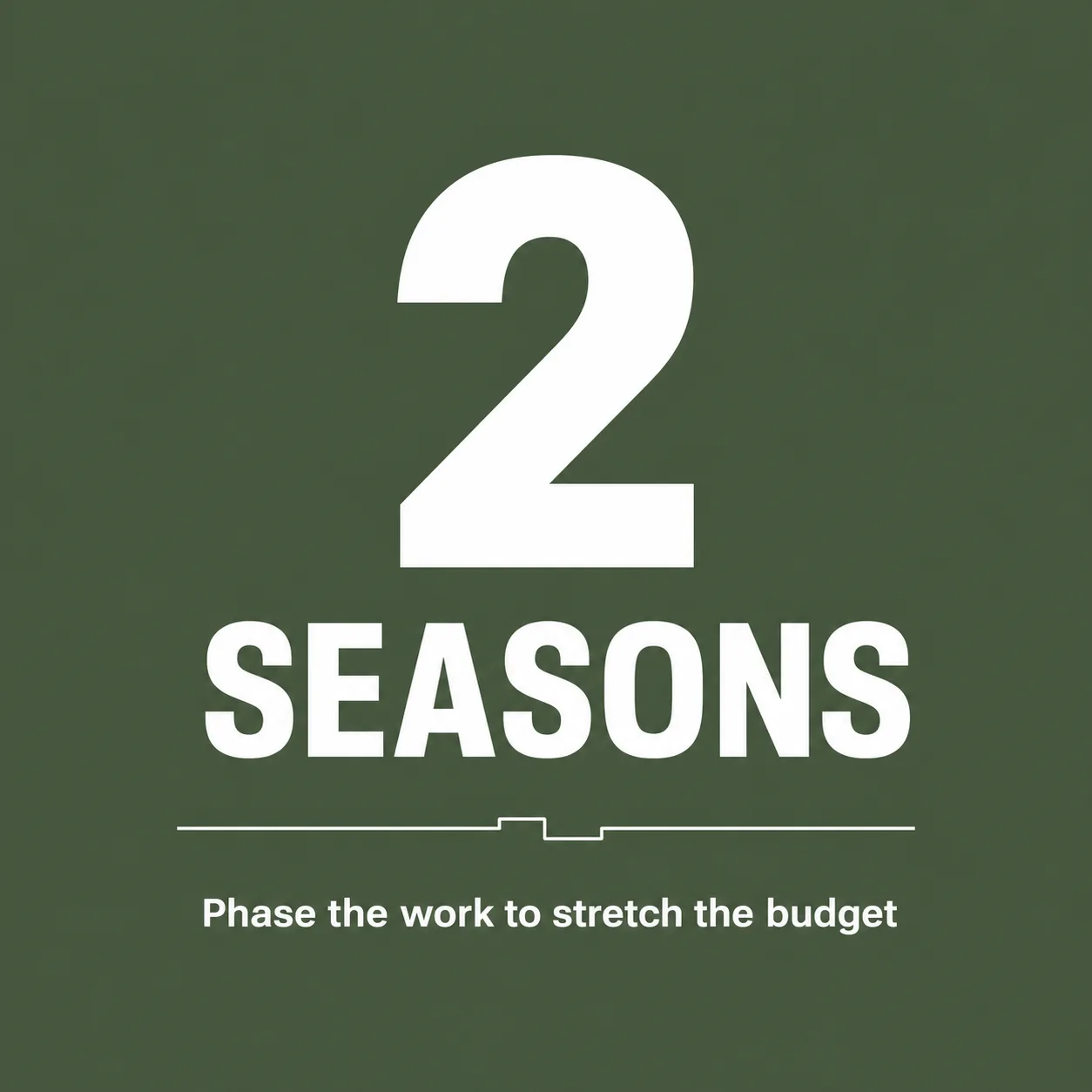
A low-cost plan starts with what you already have. Reuse existing brick or stone, phase the work across two seasons, and handle simple plantings yourself while leaving grading, drainage, and structural hardscape to a pro. Free design apps are good for ideas and rough layouts, enough to get most beginners moving without spending a dime.
A free tool can’t catch a slope or a buried utility, though, and rework costs far more than a proper plan. Simple ideas stay simple when the base plan is right the first time.
Design Mistakes That Make a Small Backyard Look Tacky
A few habits shrink a yard visually and cheapen the result:
- Overcrowding every corner until nothing breathes
- Too many materials and colors, which breaks the rule of 3
- Oversized furniture that swallows the patio
- Ignored drainage that pools after a Michigan storm
- No focal point, so the eye has nowhere to land
Smart scale and a clean layout fix all five. That same discipline let us adapt a small-lot design for tight backyards without a cluttered feel.
Plan before you plant, zone for how you actually live, and hold your materials to the rule of 3.
Working With a Metro Detroit Design-Build Team
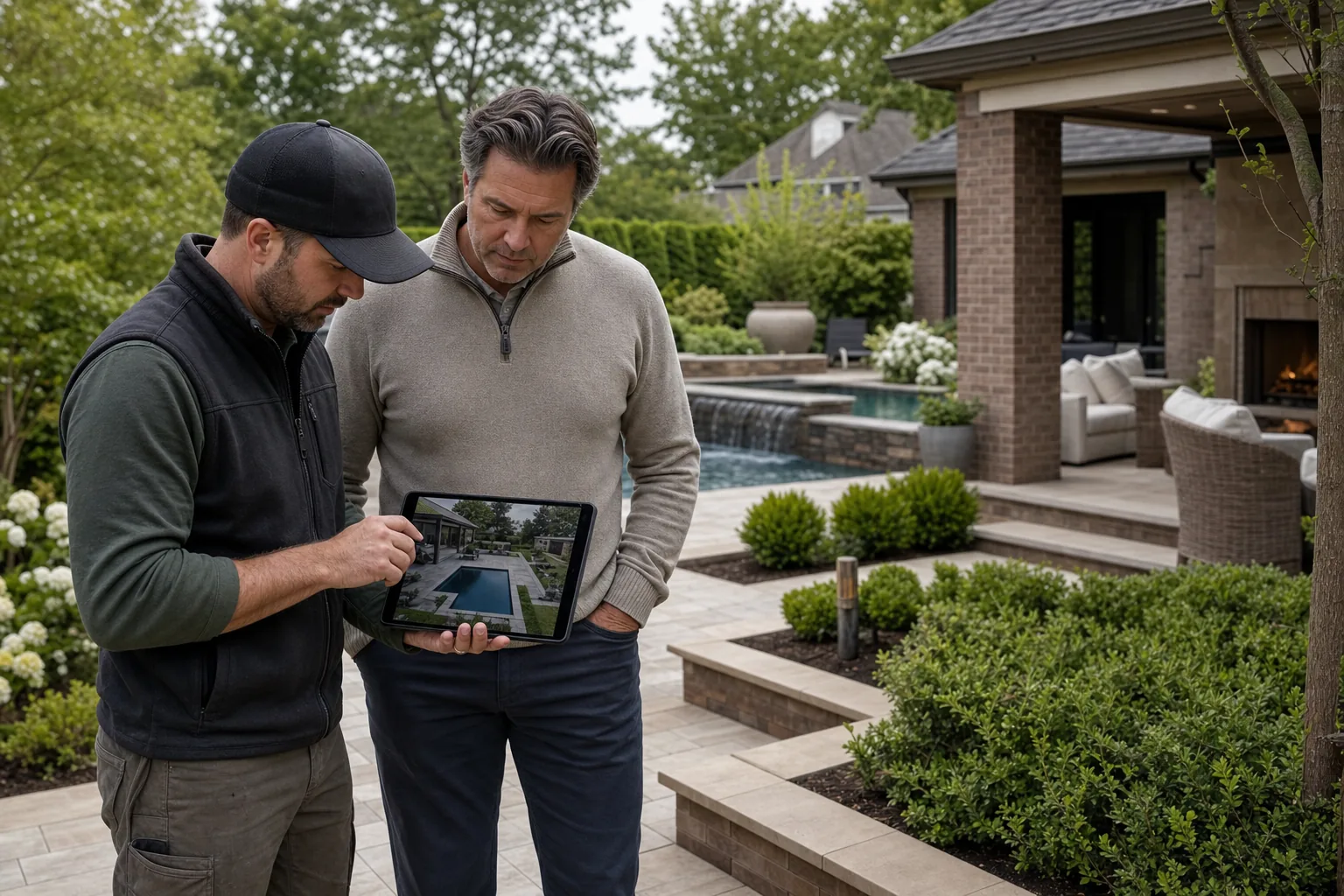
When a project adds a pool, spa, grading, or structural hardscape, one team from design through build removes the general-contractor runaround and the extra phone calls. That single-source model is the core of a complete, personalized design-build experience, backed by years of local work and direct connections to the manufacturers behind the best products.
Timing helps too. Metro Detroit’s build season runs spring through fall, so a plan drawn over winter means breaking ground early. Homeowners across Birmingham, Grosse Pointe, Bloomfield Hills, and Troy often plan in the quiet months to claim the first slots.
Frequently asked questions
How can I design my backyard for free?
What size is considered a small backyard?
How do I design a small backyard for beginners?
What is the easiest low-maintenance small backyard option?
Do I need a pro for a small backyard?
Key Takeaway
Plan before you plant, zone for how you actually live, and hold your materials to the rule of 3. Match the design to your real upkeep appetite, and a small yard will out-function a big one. Metro Detroit homeowners who want to map their space with a team that runs the whole process, first sketch to final stone, are welcome to reach out.