
This guide explains what you can realistically expect from your paver patio lifespan, the key factors that affect durability, and how pavers stack up against other outdoor surfaces.
How Long Do Paver Patios Last on Average?
In Michigan, a paver patio built with professional-grade techniques and premium materials can last 50 to 75 years.
Standard installations using quality pavers and competent workmanship reach 20 to 30 years. Poor installations with shortcuts can fail within 10 to 15 years or even less.
The term “last” means different things to different people. Structural integrity refers to whether the patio remains level, stable, and safe. Appearance focuses on color retention, surface condition, and aesthetic appeal.
A patio might remain structurally sound for decades but show cosmetic wear after years without proper care.
| Installation Quality | Expected Lifespan | Key Characteristics |
| Poor (shortcuts, thin base) | 10-15 years | Settles unevenly, develops low spots, joints separate |
| Average (standard methods) | 20-30 years | Performs adequately, requires moderate repairs |
| Professional (proper base, drainage) | 30-50+ years | Stays level, minimal repairs, consistent appearance |
From our experience with residential projects across Southeast Michigan, the base preparation determines longevity more than any other single factor.
Pavers themselves rarely fail. The structure underneath causes most problems when patios deteriorate prematurely.
The modular nature of pavers offers a unique advantage. Individual units can be lifted and reset if minor issues develop. This repairability extends functional life well beyond what’s possible with monolithic surfaces like poured concrete or stamped alternatives.
What Factors Affect the Lifespan of a Paver Patio?
The pavers themselves rarely represent the weak point in patio construction. Everything underneath determines how durable are paver patios over time. Five primary factors control longevity.
- Base Preparation
Base preparation creates the foundation for everything above it. A proper base includes compacted gravel extending below the frost line in cold climates. Inadequate base depth or poor compaction allows the ground to shift and settle unevenly.
- Drainage Design
Drainage design removes water before it causes problems. Water trapped under pavers has nowhere to go during freeze-thaw cycles. The pressure from ice expansion pushes pavers apart and creates uneven surfaces. Proper slope and drainage systems prevent this damage.
- Material Quality
Material quality affects both appearance and structure. Premium pavers resist absorption, which protects against freeze-thaw damage in cold climates. Dense materials hold up better under heavy use and harsh weather.
Choosing the best pavers suited to Michigan’s climate prevents premature failure.
- Edge Restraints
Edge restraints keep pavers locked in place. Without proper edging, the outside perimeter gradually spreads outward. This movement creates gaps in joints and causes the entire patio to lose structural integrity over time.
- Joint Stabilization
Joint stabilization prevents weed growth and keeps pavers tight. Polymeric sand resists washout better than standard sand. The joints stay filled and prevent debris accumulation that can force pavers apart.
- Climate Conditions
Climate plays a role but not the decisive one many people assume. A well-built patio in Michigan can outlast a poorly built one in Florida. The key differences come down to technical execution rather than weather alone.
| Longevity Factor | Why It Matters |
| Base preparation | Prevents settlement and heave |
| Drainage system | Removes water before freeze damage |
| Material quality | Determines resistance to wear and weather |
| Edge restraint | Stops lateral spreading over time |
| Joint sand | Prevents weed growth and shifting |
| Climate conditions | Accelerates or slows wear patterns |
Installation Quality: The #1 Reason Paver Patios Last (or Fail)
Two patios can use identical pavers and fail decades apart. The difference comes down to installation methods.
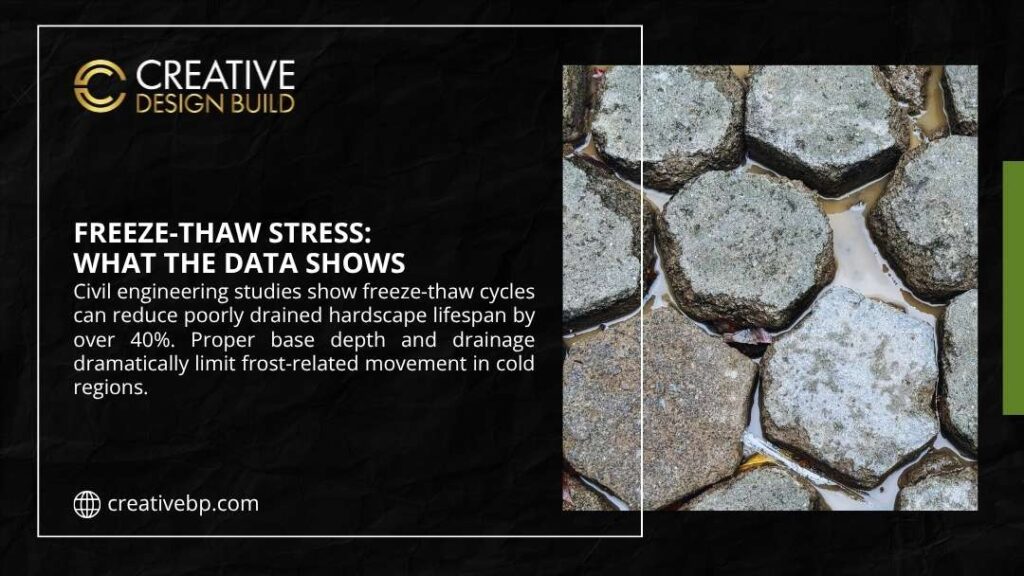
Base excavation depth must extend below the frost line in cold climates, typically 42 inches in Michigan. Shallow bases allow frost heave to push pavers upward each winter.
The ground settles back down when temperatures warm, but pavers don’t return to their original position. Years of this cycle create uneven surfaces and drainage problems.
A proper base consists of multiple layers, with compacted crushed stone forming the foundation, and angular gravel locking together more effectively than rounded stone.
Each layer gets compacted to 95% density or higher to prevent future settlement and maintains a level surface.
| Proper Installation Steps | Common Shortcuts | Long-Term Result |
| 42-inch excavation depth | 12-18 inch depth | Frost heave damage within 2-3 winters |
| Compacted angular stone base | Uncompacted sand or loose gravel | Rapid settlement, uneven surface |
| Slope at 2% for drainage | Flat or improper grade | Water pooling, ice damage |
| Rigid edge restraints | No edging or landscape timbers | Spreading, joint separation |
| Polymeric joint sand | Standard play sand | Washout, weed growth, instability |
Drainage integration protects the investment, as proper slope carries water away from structures and prevents pooling on the patio surface.
Some projects need French drains or channel drains to handle heavy water flow. The cost of proper drainage pays back many times over by preventing damage.
From our work with clients who come to us after failed patio installations, the pattern usually remains the same. Shortcuts in base preparation cause nearly all premature failures.
Homeowners often ask “why is my paver patio sinking” when the real issue traces back to inadequate base depth or poor compaction during initial construction.
The small additional cost for proper installation represents smart economics. Professional techniques add perhaps 15% to 25% to total project cost but double or triple the functional life of the patio.
Do Paver Patios Last Longer Than Concrete or Other Materials?
Concrete may look solid and permanent, but longevity isn’t just about hardness. The comparison between pavers and alternative materials reveals some surprises about long-term durability.
Paver vs concrete longevity depends on installation quality for both materials, but pavers offer one decisive advantage, which is repairability.
When poured concrete cracks, repair options remain limited, which makes the cracks stay visible, and patches rarely match the original surface. Pavers can be lifted individually, the base repaired, and the same pavers reinstalled.
Poured concrete typically lasts 15 to 25 years before major cracks develop. Stamped concrete adds decorative appeal but shares the same structural limitations. A single crack can spread across the entire slab. Cold climates accelerate this process through freeze-thaw cycles.
| Material Type | Typical Lifespan | Repair Difficulty | Maintenance Level | Appearance Over Time |
| Concrete pavers | 25-50 years | Easy (modular) | Low to moderate | Can look new after decades |
| Clay brick pavers | 40-50+ years | Easy (modular) | Low | Ages gracefully, stable color |
| Poured concrete | 15-25 years | Difficult (cracks visible) | Moderate | Shows cracks and wear |
| Stamped concrete | 15-25 years | Very difficult | High (needs sealing) | Pattern wears, color fades |
| Wood decking | 10-20 years | Moderate | High (annual treatment) | Requires refinish, prone to rot |
The question of bluestone vs pavers for durability comes up frequently.
Dense natural stone like bluestone can last 50 years or more. The material resists freeze-thaw damage when properly selected. However, natural stone costs more upfront and requires careful installation to prevent lippage (uneven surface heights).
From our experience, pavers deliver the best combination of longevity, repairability, and appearance retention.
Even after 30 years, a paver patio can look nearly new after cleaning and joint sand replacement, while a concrete slab shows its age through multiple cracks and patches.
The modular nature of pavers transforms how we think about outdoor surface longevity. Instead of replacement cycles, pavers follow a maintenance and repair model that extends functional life indefinitely.
How Climate and Weather Affect Paver Patio Longevity
Freeze-thaw cycles create the most stress in cold climates. Water penetrates the base or pavers themselves during warm periods.
When temperatures drop below freezing, that water expands by roughly 9% as it turns to ice. The pressure from this expansion pushes materials apart.
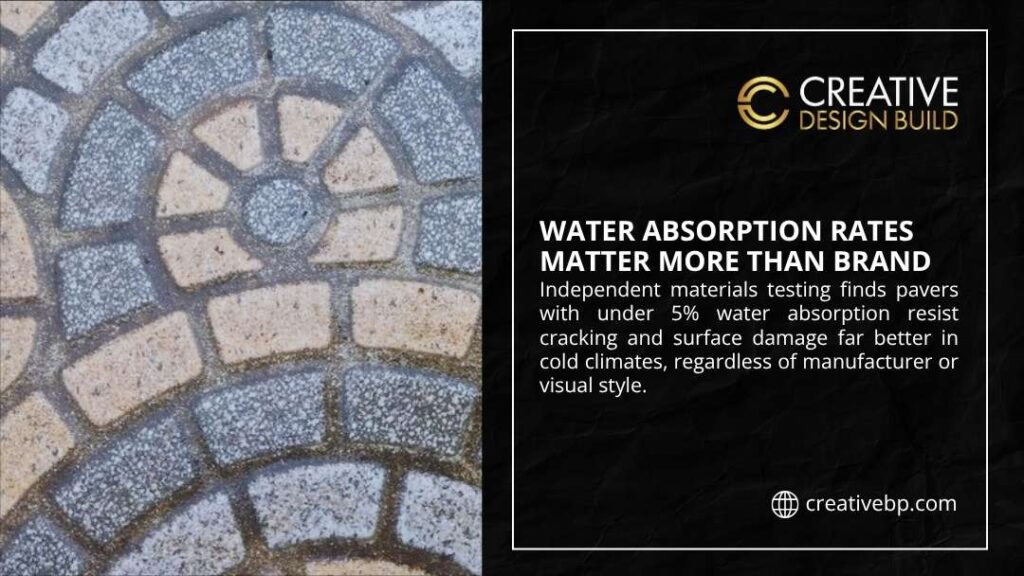
Pavers with low water absorption rates resist freeze-thaw damage effectively. Dense materials that absorb less than 5% of their weight in water perform well in cold climates.
The right paver selection for cold regions prevents the most common climate-related failures.
| Climate Condition | Challenge Created | Recommended Design Adjustment |
| Freeze-thaw cycles (cold) | Ice expansion damage | Use low-absorption pavers, deep base below frost line |
| Heavy rainfall (humid) | Base saturation, drainage issues | Install French drains, increase base stone depth |
| Extreme heat (arid) | Thermal expansion, fading | Use light colors, wider joints, UV-stable materials |
| High humidity (coastal) | Algae growth, salt exposure | Apply sealer, use salt-resistant materials |
| Snow load (northern) | Surface stress, salt damage | Install proper slope, avoid harsh de-icers |
Hot, arid climates create different challenges, as thermal expansion occurs as materials heat up during the day. Proper joint spacing allows this expansion without cracking and light-colored pavers stay cooler while also reducing heat stress.
Heavy rainfall regions need excellent drainage systems. The base must shed water quickly to prevent saturation, because waterlogged bases lose load-bearing capacity and allow settlement.
For some projects, adding French drains or other water-management features can help with protecting the patio.
Coastal areas face salt exposure and humidity. Salt accelerates material breakdown in some paver types. Sealed surfaces resist salt penetration better than unsealed ones.
The decision about whether to seal a paver patio depends partly on climate factors.
Regional professionals understand local conditions best. For example, a Michigan installer knows frost line depths and proper base requirements, whereas a Florida installer focuses on issues like high water tables and hurricane debris.
From our work across Southeast Michigan, we can confirm that properly built patios survive brutal winters year after year. The key lies in technical execution, not climate avoidance.
Maintenance Expectations: What’s Required to Keep Pavers Looking New
Low maintenance doesn’t mean no maintenance, but a realistic upkeep approach can extend both the patio’s appearance and structural life.
The good news is that paver patio maintenance tips are straightforward and require minimal time investment.
- Annual Cleaning
Cleaning paver patios once a year helps remove debris, prevents stains, and reveals any developing issues. A pressure washer handles this task quickly and many homeowners are preferring professional cleaning.
Clean pavers also resists moss growth and maintain consistent color.
- Joint Sand Replenishment
Over time, joint sand naturally wears away, with standard sand gradually washing out and polymeric sand lasting longer but eventually needing replacement.
By checking and refilling the joints annually, you can prevent weed growth and maintain the stability of their pavers.
- Sealer Application
Sealed surfaces resist stains and improve the color vibrancy. The trade-off includes reapplication every 2 to 3 years and potential for uneven appearance if not applied correctly.
Winter hardscape maintenance also matters in cold climates. Avoid metal snow shovels that chip paver surfaces.
You can choose calcium chloride de-icers over sodium chloride products when possible because the right approach prevents unnecessary surface damage during harsh weather.
- Stain Treatment
Stain treatment should happen promptly. Oil, rust, or organic stains become harder to remove over time. Most stains respond to appropriate cleaners when addressed quickly. Sealed pavers resist stain absorption better than unsealed surfaces.
| Maintenance Task | Frequency | Purpose | Difficulty Level |
| Surface cleaning | Annual | Remove debris, prevent stains | Easy (DIY) |
| Joint sand inspection | Annual | Check for washout or gaps | Easy (DIY) |
| Joint sand refill | As needed (2-5 years) | Maintain stability, prevent weeds | Easy (DIY) |
| Sealer application | Every 2-3 years (optional) | Enhance appearance, resist stains | Moderate (DIY or pro) |
| Edge restraint check | Every 3-5 years | Ensure border stability | Moderate (DIY or pro) |
| Full inspection | Every 5 years | Identify and address developing issues | Easy (DIY or pro) |
What we can say as professionals, is that homeowners who spend a few hours per year on basic maintenance enjoy patios that look nearly new after 15 or 20 years.
The time commitment stays minimal compared to wood deck maintenance or concrete sealing requirements. This combination of durability and low maintenance explains why pavers remain popular for outdoor living spaces.
Can a Failing Paver Patio Be Repaired Instead of Replaced?
A failing paver patio can often be repaired rather than fully replaced. Individual pavers can be lifted, leveled, and reset, and joint sand can be replenished to restore stability and appearance.
Modular repairability represents one of the strongest arguments for pavers over monolithic surfaces. Common paver patio problems often have simple solutions that cost a fraction of full replacement.
| Common Issue | Repair Method | Time Required |
| Small settled area | Lift pavers, add base, reset | 2-4 hours |
| Widespread settlement | Lift entire section, regrade, reset | 1-2 days |
| Joint sand washout | Clean, refill with polymeric sand | 2-3 hours |
| Cracked pavers (few) | Replace individual units | 1-2 hours |
| Edge spreading | Reinstall edge restraint, reset border | 3-5 hours |
| Drainage issues | Add channel drain or adjust grade | 1-3 days |
From our work with paver patio repair and maintenance, we frequently see 25-year-old patios that look nearly perfect after a few hours of targeted work. The investment in repairs returns exceptional value.
Is a Paver Patio Worth It for Long-Term Value?
Yes, a paver patio is worth it for long-term value as they are durable, low-maintenance, and can last decades if they are installed correctly.
They cost more initially than basic concrete but deliver better long-term value through extended life and lower maintenance costs.
A professionally built paver patio in Southeast Michigan typically costs $15 to $30 per square foot installed. Premium materials and complex designs push costs higher. Basic poured concrete comes in at $8 to $15 per square foot for comparison.
The gap narrows when you factor in lifecycle costs. Pavers last 30 to 50 years with minimal repairs. Concrete requires replacement after 20 years or less. A paver patio might cost $18,000 versus $12,000 for concrete initially.
Over 40 years, the concrete needs replacement once ($12,000 more), while the pavers need minor repairs ($2,000 total).
| Cost Factor | Paver Patio | Poured Concrete |
| Initial installation (600 sq ft) | Higher upfront cost | Lower upfront cost |
| Replacement costs (years 20-40) | None required | Full replacement likely needed |
| Maintenance costs (40 years) | Low | Moderate |
| Total 40-year cost | Lower overall | Higher overall |
| Cost per year | Lower | Higher |
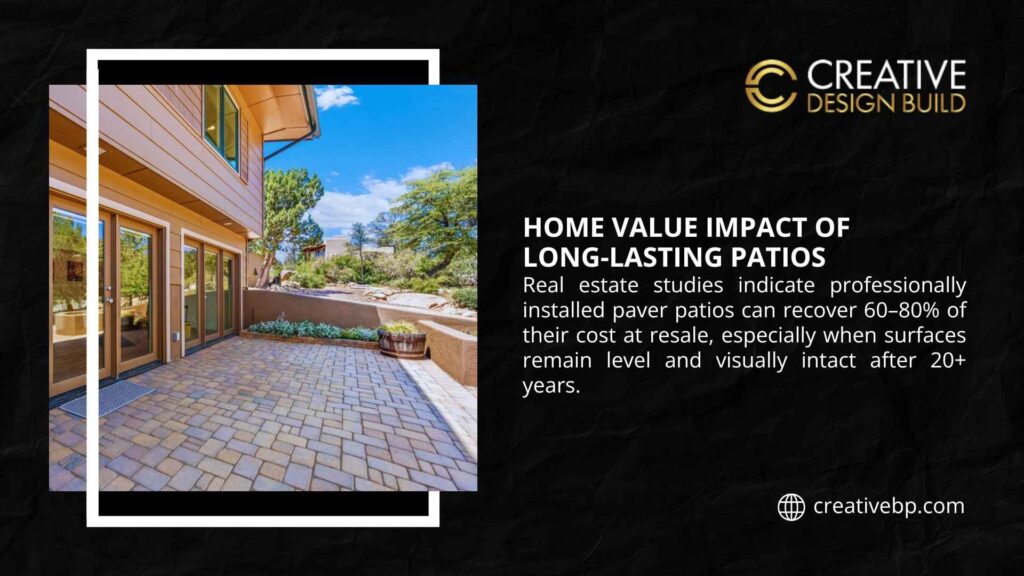
The question of whether a patio adds value to a home generally receives a positive answer, especially in markets where outdoor living spaces are popular.
Clients rarely regret choosing pavers over less expensive alternatives, as their extended lifespan and low maintenance requirements demonstrate their long-term value.
Budget constraints might necessitate phasing a project, but quality installation methods and materials pay back their premium consistently.
The calculation shifts slightly for very large commercial projects where initial cost dominates decision-making. For residential applications, lifecycle value strongly favors pavers over alternatives.
Frequently Asked Questions About How Long Do Paver Patios Last
Can a paver patio last 50 years or more?
Yes, professionally built paver patios regularly reach 50 years or more with periodic maintenance. The key factors include proper base preparation, quality materials, good drainage, and occasional repairs.
What causes paver patios to fail before 20 years?
Most early patio problems happen because the base wasn’t prepared properly. If the ground isn’t dug deep enough, isn’t packed tightly, or doesn’t drain well, the patio can sink or heave in winter.
Do paver patios crack over time like concrete?
Paver patios can crack from point impacts, but the modular design prevents cracks from spreading. Damaged pavers replace easily without affecting surrounding areas and this differs a lot from concrete slabs where cracks spread and repairs remain visible.
How often do paver patios need maintenance?
The main maintenance tasks for a paver patio are annual cleaning and checking the joint sand. Depending on the weather and how much the patio is used, joint sand may need to be refilled every 2 to 5 years. Sealing is optional, but if used, it’s usually done every 2 to 3 years.
Key Considerations for Long-Term Paver Patio Performance
Paver patio durability factors point consistently toward installation quality and maintenance practices rather than material selection alone. A properly built patio using mid-range materials outlasts a poorly built one using premium pavers every time.
The 25 to 50-year lifespan range isn’t a guess. Real-world installations across diverse climates demonstrate this performance level when proper techniques guide construction.
If you invest in quality installation and follow basic maintenance schedules, you will enjoy long-lasting outdoor patios that look nearly new decades after construction.