
Landscape design can raise property value, but only when it’s done with intent. A thoughtfully planned outdoor space doesn’t just improve appearance; it changes how a home is experienced. Buyers notice that difference. Appraisers often reflect it. And in many cases, it translates into stronger offers and faster sales.
In this guide, we break down how and when landscape design adds measurable value, what actually influences ROI, and which upgrades make a real difference when it comes time to sell.
Does Landscape Design Add Home Value?
Yes, it does, but not in a flat, predictable way. Some projects barely move the needle. Others shift the entire perception of a property.
Here’s what I’ve seen time and again: homes with intentional outdoor design tend to feel complete. Not flashy. Not overdone. Just finished. That alone changes how buyers react.
It’s not about planting more. It’s about placing everything with purpose, walkways that guide movement, greenery that frames the home, and spaces that feel usable instead of decorative. That’s where landscaping increases home value becomes real, not theoretical.
In competitive neighborhoods, that difference often decides whether a buyer hesitates or moves forward. And that’s why it matters.
How Much Value Does Landscaping Add to a Home?
The real question most homeowners ask is simple: how much value does landscaping add to a home? The answer depends less on cost and more on clarity. A scattered upgrade might look nice, but it rarely adds measurable value. A cohesive design, on the other hand, often does.
| Landscaping Type | Estimated Value Increase | ROI Range |
| Basic Lawn Care | 3%–5% | High |
| Professional Landscape Design | 10%–15% | High |
| Outdoor Living Upgrades | 15%–20% | High |
Reports from the National Association of Realtors suggest that well-executed landscaping projects can return close to, or sometimes more than, the initial investment. That’s not common in home improvement.
But here’s the thing. The return doesn’t come from effort alone. It comes from decisions, what to build, where to place it, and how everything connects.
Landscaping ROI: What the Data Actually Says
When people talk about landscaping return on investment, they often compare it to interior renovations. That comparison reveals something interesting.
| Project Type | Average ROI |
| Landscaping Improvements | 100%–200% |
| Kitchen Remodel | 50%–80% |
| Bathroom Remodel | 60%–70% |
Note: ROI varies greatly depending on the project’s location and scale. Outdoor improvements tend to perform well because they expand how a property is used without changing its footprint. A well-designed outdoor living space can feel like an extension of the home itself.
And buyers respond to that. The shift toward functional outdoor living has made landscaping ROI one of the more reliable returns in today’s housing market.
Why Landscaping Plays a Crucial Role in Property Value
First impressions don’t give you time. They just happen. Most buyers form an opinion before they’ve even reached the door. Sometimes it’s the driveway, sometimes the walkway, sometimes just the way the house sits within the yard. Whatever it is, that first glance sticks.
Landscaping plays into that moment more than people expect. Not in a loud way, but in a quiet, almost background way. A yard that feels put together, with clean lines, balanced spacing, and nothing out of place, creates a sense that the home has been cared for. And once that idea is there, it’s hard to shake.
There’s also something a bit less obvious going on. People tend to connect what they see outside with what they assume is inside. If the exterior feels neglected, they start wondering what else hasn’t been maintained. If it feels considered, the opposite happens.
That assumption isn’t always accurate, but it influences how buyers move through the property. They linger longer. They notice details differently. That’s really where landscaping starts to matter. It’s not just about appearance. It shapes how the entire property is interpreted from the start.
Types of Landscaping That Increase Home Value the Most
Some upgrades stand out right away. Others don’t register much at all. It’s not always about how expensive something is. More often, it comes down to whether the space makes sense as a whole.
Thoughtful Landscape Design
A well-designed landscape doesn’t call attention to itself. That’s usually the first sign it’s working. Nothing feels random. Paths lead somewhere without forcing it. Plants don’t compete; they support the layout. Even open areas feel deliberate instead of unfinished.
There’s a kind of balance that’s hard to describe but easy to notice. You can walk through the space without second-guessing where to go or how it’s meant to be used.
Native plants often help with this, especially because they settle into the environment more naturally. Over time, they tend to look like they’ve always been there, which is part of the appeal.
Outdoor Living Spaces
Outdoor areas have changed a lot over the years. They’re no longer just extra space; they’re expected to serve a purpose. Buyers tend to pause when they see somewhere they can actually use. Not just look at, but use. A place to sit, to gather, to spend time without needing to change anything.
Does a patio increase home value? In many cases, yes. But it’s not just the patio itself; it’s how it fits. If it feels connected to the home, almost like it was planned from the beginning, it works. If it feels added on later, the effect isn’t the same. That difference is subtle, but people notice it.
Hardscaping Features
Hardscaping brings a kind of structure that softer elements don’t. It defines space without needing explanation. Walkways guide movement. Walls create boundaries. Paved areas give a sense of permanence.
Does hardscaping add value to a home? It often does, especially when it improves how the space functions. There’s also a durability factor. Stone and similar materials tend to hold up over time, and buyers recognize that, even if they don’t consciously think about it. It feels solid. Reliable.
Mature Trees and Greenery
Mature trees change everything about a space. Not dramatically, but in ways that build over time. They create shade, which makes the area more comfortable. They add height, which balances the scale of the property. And they bring a sense of age that new landscaping can’t replicate right away.
There’s also the way they affect light. Depending on the time of day, they soften it, filter it, shift it. That changes how the entire yard feels without drawing attention to itself. And that’s really the point. The impact is subtle, but it stays with people.
Does a Backyard Increase Property Value?
Backyards used to be secondary spaces. Now, they carry weight, sometimes more than the front yard. Does a backyard increase property value? Yes, but only if it offers something beyond open space. A plain lawn rarely changes buyer behavior. That holds true regardless of square footage, and on smaller lots the payoff can be even sharper — our guide to making a compact backyard feel larger walks through the layout moves that buyers notice. A usable layout does.
Buyers tend to look for structure. Not necessarily complexity, but definition. A seating area, a subtle division between zones, maybe a path that connects everything without drawing attention to itself. These small details shift how the space is perceived.
A designed backyard often answers unspoken questions: Where would I sit? Where would guests gather? Could this space be used daily?
That’s why the value of a nice backyard addition isn’t tied to size. It’s tied to usability. Even a modest space can outperform a large but undefined yard. And in practice, that’s where backyard ideas to increase home value begin to matter, when they translate into everyday function rather than decoration.
Does Landscaping Affect Home Appraisal?
Not in isolation, but it influences everything around it. Appraisers don’t typically assign a fixed dollar amount to landscaping. Instead, they evaluate the property as a whole. That’s where landscaping enters the equation.
A well-maintained and thoughtfully designed exterior supports stronger comparisons with nearby properties. It signals upkeep. It suggests investment. And that often nudges valuation upward when other factors align.
There’s also a subtler effect. Properties with strong curb appeal tend to photograph better, show better, and generate more interest. That increased demand can push the final sale price beyond what the appraisal alone might suggest.
So while landscaping doesn’t always appear as a line item, it plays a supporting role that’s hard to ignore.
Is Landscaping a Good Investment or Just an Expense?
It depends on how the decision is made. Projects driven by impulse, adding features without a plan, often fall short. They may improve appearance briefly, but they rarely hold value.
On the other hand, investing in landscaping with a clear design approach tends to deliver both short-term and long-term returns. It improves daily use of the property while positioning it better in the market.
There’s also a timing factor. If a homeowner plans to sell within a few years, landscaping can influence buyer perception almost immediately. For those staying longer, the return becomes more gradual, tied to both enjoyment and eventual resale.
So, is landscaping worth the money? In many cases, yes, but only when it’s approached with intent rather than reaction.
Design vs DIY: What Actually Adds More Value?
This is where many homeowners hesitate. Should they handle improvements themselves or bring in a professional? DIY work can certainly improve appearance. But without a plan, it often lacks cohesion. Pieces don’t always connect, and over time, that becomes visible.
A designed approach introduces structure from the start. It considers how elements relate to each other, not just how they look individually.
| Factor | DIY Landscaping | Professional Design |
| Planning | Limited or reactive | Structured and intentional |
| Cohesion | Often fragmented | Fully integrated |
| Long-Term Value | Moderate | High |
| Material Selection | Trial and error | Strategically chosen |
| ROI Potential | Unpredictable | Consistent |
Before making that decision, it helps to understand how a project unfolds. Reviewing a structured landscape design process often reveals where value is gained and where mistakes are avoided. In most cases, the difference isn’t effort. It’s alignment.
Real Estate Landscaping Trends Buyers Notice in 2026
Buyer expectations have shifted quietly over the past few years. What once felt like an upgrade is now expected. Outdoor spaces are no longer decorative. They’re functional extensions of the home. Buyers look for areas that support daily routines, morning coffee, small gatherings, and quiet evenings.
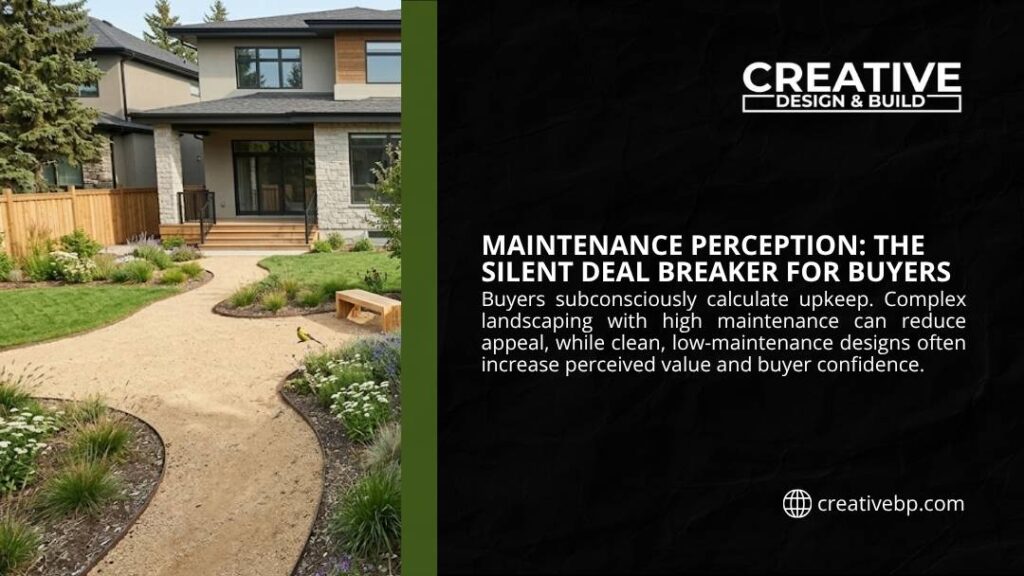
There’s also a growing preference for simplicity. Low-maintenance designs, native plants, and efficient layouts are gaining attention because they reduce long-term effort without sacrificing appeal.
Water features and subtle lighting continue to appear in higher-end properties, but even these are used with restraint. The focus has moved toward balance rather than excess. In short, thoughtful landscaping now leans toward usability, not display.
How Professional Design-Build Services Maximize ROI
There’s a point where design and construction meet, and that point often determines the outcome. When those phases are handled separately, gaps can appear. Details get lost. Adjustments happen on-site rather than on paper. And the final result may drift from the original vision.
A design-build approach removes that disconnect. It keeps planning and execution aligned from the beginning. Homeowners who explore integrated design and build services tend to experience fewer revisions and more consistent results. Looking through a curated portfolio of completed projects often makes that difference clear without much explanation. The value here isn’t just efficiency. It’s continuity.
Common Landscaping Mistakes That Reduce Home Value
Some mistakes are easy to spot. Others reveal themselves over time. Either way, they can affect how a property is perceived.
| Mistake | Impact on Value |
| Overdesign | Creates visual clutter |
| Poor Drainage | Leads to long-term issues |
| Low-Quality Materials | Reduces durability |
| Lack of Cohesion | Feels incomplete |
| High Maintenance Needs | Discourages buyers |
What tends to stand out most is inconsistency. When elements don’t connect, the space feels unsettled, even if each part looks fine on its own. Avoiding these issues usually comes down to planning, not cost.
How Long Does It Take to See ROI on Landscaping?
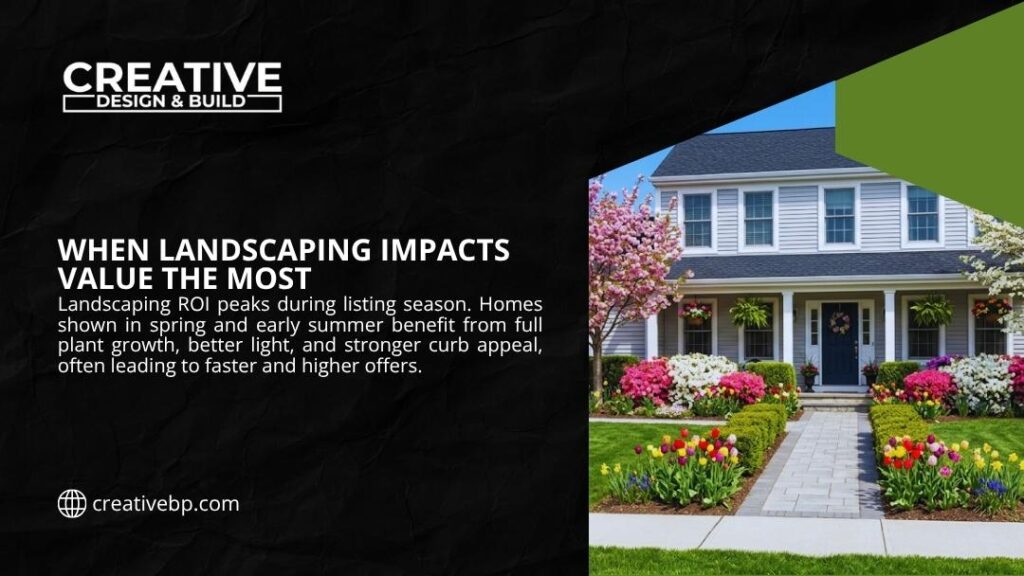
The timeline varies, but the initial impact can be immediate. When a property is listed for sale, landscaping influences first impressions right away. That reaction often shapes how buyers approach the rest of the home.
Long-term value develops differently. Plants mature. Materials settle. The space becomes more established. Over time, those changes strengthen both appearance and functionality.
In many cases, homeowners begin to see returns not just financially, but in how often they use the space themselves.
Cost vs Value Breakdown of Landscape Design Projects
Costs alone don’t tell the full story. What matters is how those costs translate into usable value.
| Project Type | Average Cost | Value Added |
| Patio Installation | $5,000–$20,000 | High |
| Full Landscape Design | $10,000–$50,000 | Very High |
| Basic Lawn Upgrade | $1,000–$5,000 | Limited |
Projects guided by design tend to perform better because they connect each element into a single experience rather than isolated upgrades. That connection is where most of the value comes from.
When Landscaping Does NOT Add Value
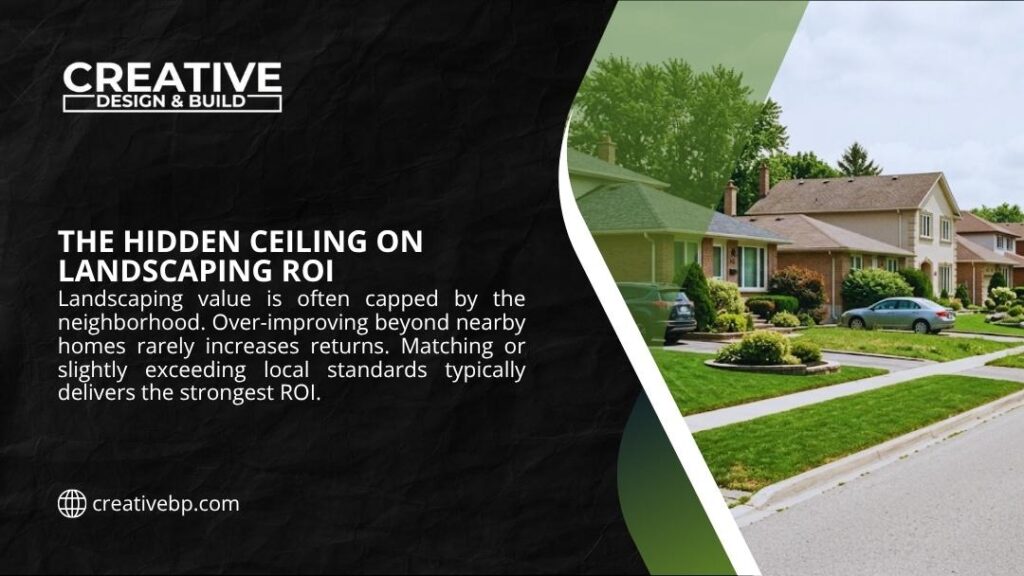
Not every project improves a property. Some actually make it harder to sell. Overly complex designs can overwhelm buyers. Features that require constant upkeep may raise concerns about maintenance. Even high-end materials can fall flat if they don’t align with the home’s style or the surrounding neighborhood.
There’s also the issue of scale. Improvements that exceed local expectations don’t always translate into higher returns. The goal isn’t to impress, it’s to fit naturally while elevating the space.
Expert Insight: What Buyers Actually Look For
Buyers rarely analyze landscaping in technical terms. Their response is more instinctive. They look for ease. Can the space be used without major changes? Does it feel manageable? Does it connect with the home rather than sit beside it?
Function often outweighs complexity. A simple, well-designed layout tends to perform better than a detailed but impractical one. That’s why the landscaping home’s value depends on clarity. When a space feels resolved, buyers don’t question it; they accept it.
FAQs
Does landscape design add home value quickly?
It can, but quickly, depends on the situation. If the house is about to be listed, then the impact shows up almost right away because people react to the outside first. Even small changes can shift how the place feels, which ends up affecting how seriously buyers take it.
Does a patio increase home value significantly?
Sometimes it does, sometimes not as much; it depends on how it fits. A patio that feels like part of the home usually adds more value than one that looks separate or out of place. People tend to picture themselves using it, and that’s where it starts to matter.
Is landscaping a good investment before selling a house?
In most cases, yes, but not because it magically raises the price. It just makes the home easier to like. And when buyers feel comfortable right away, they’re less hesitant. That alone can make a noticeable difference.
What type of landscaping adds the most value?
Usually, the kind you can actually use. That’s what people respond to. A space that feels practical, somewhere to sit, walk, or spend time, tends to matter more than something that just looks decorative but doesn’t really do anything.
Is professional landscape design better than DIY for home value?
A lot of the time, yes. Not because DIY can’t look good, it definitely can, but because professional work usually feels more connected. With DIY, things sometimes get done in stages, and over time, you can tell it wasn’t all planned together.
Making the Right Move for Your Property
Does landscape design add home value? It does, but only when decisions are made with purpose.
A structured approach often leads to better outcomes. Exploring a clear design-to-build process can help align expectations early on. For those considering next steps, starting with a project consultation provides a more accurate sense of what’s possible for a specific property.
In the end, landscaping isn’t just about how a home looks. It shapes how it’s experienced, and that experience is what buyers remember.