
If you’re planning any kind of outdoor upgrade, patio, pool, or full backyard transformation, you’ll almost certainly run into this question: should I hire landscape designer and contractor separately? It sounds like a simple choice. In reality, it rarely is.
Some homeowners like to split up roles because it gives them more freedom. Some people want one team to take care of everything without having to go back and forth. Both ways can work. But the journey and the result can be very different depending on which path you choose.
The most important thing is that as your project gets more complicated, coordination becomes more important. That’s usually where things either come together or fall apart.
This guide goes into more detail about whether you should hire a landscape designer and contractor separately, what can go wrong, where it works, and why many homeowners now prefer a design-build approach that is more integrated.
Should I Hire Landscape Designer and Contractor Separately?
You can hire a landscape designer and a contractor separately, yes. People do it all the time. But whether or not you should is a different story. It’s usually fine for smaller projects. For example, you could be adding a path or replanting your flower beds. The design is simple, the construction is easy, and there isn’t much room for things to go wrong.
Now imagine something more involved. A custom patio tied into a pool. Outdoor kitchen. Lighting. Drainage. Different materials working together. Suddenly, the margin for miscommunication gets thinner. That’s usually the turning point.
Because when the design says one thing and the build goes another direction, even slightly, you’re the one stuck in the middle trying to sort it out. And that’s exactly why many homeowners end up moving toward landscape design and build services. Not because it sounds better, but because it removes that gap entirely.
Understanding the Difference Between a Landscape Designer and a Contractor
Not knowing where one role ends and the other begins causes a lot of confusion. A landscape designer is in charge of how the space should look and work. They plan it out. They think about how everything fits together, how big or small it should be, and what materials to use. It’s about having a vision and being practical.
A contractor doesn’t come up with the idea. They made it. They’re in charge of making those plans into something real that works on your property. This is a better way to think about it:
| Area | Landscape Designer (or architect) | Landscape Contractor |
| Main Focus | Planning the space | Building the space |
| Stage | Before construction (Concept and Design) | During construction (Installation and execution) |
| Output | Drawings, layouts | Finished structures |
| Priority | Design intent | Execution quality |
Individually, both roles are valuable. The challenge shows up when they aren’t aligned from the start.
Landscape Design vs Design-Build Landscaping: What’s the Real Difference?
If you hire separately, the project happens in pieces. First design. Then build. Each step depends on the other, but they’re handled by different people.
In design-build landscaping, those steps aren’t split. The same team handles both. That changes more than just convenience. It changes accountability.
| Project Aspect (Between a designer and a contractor | Separate Hiring | Design-Build Landscaping |
| Communication | Through homeowner | Within one team |
| Changes | Often reactive | Planned ahead |
| Responsibility | Divided | Clear and unified |
| Outcome | Can drift from design | Stays consistent |
And here’s what often gets overlooked: when one team owns the entire process, they’re invested in getting it right from the beginning.
Cost Comparison: Is It Cheaper to Hire Separately?
At first glance, yes. Hiring separately can look cheaper. You can compare quotes, negotiate each piece, and try to control the budget step by step. But that’s only the surface.
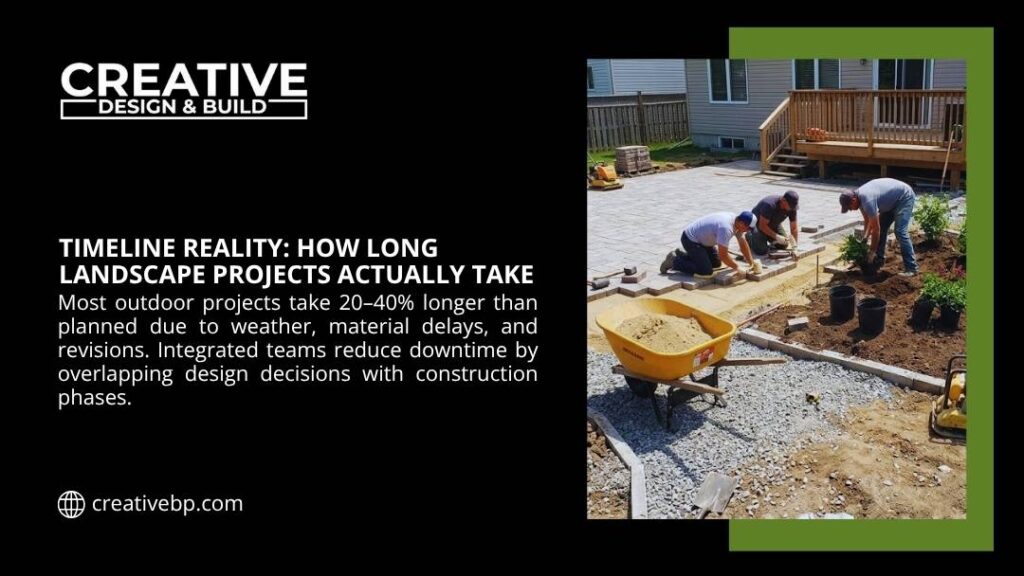
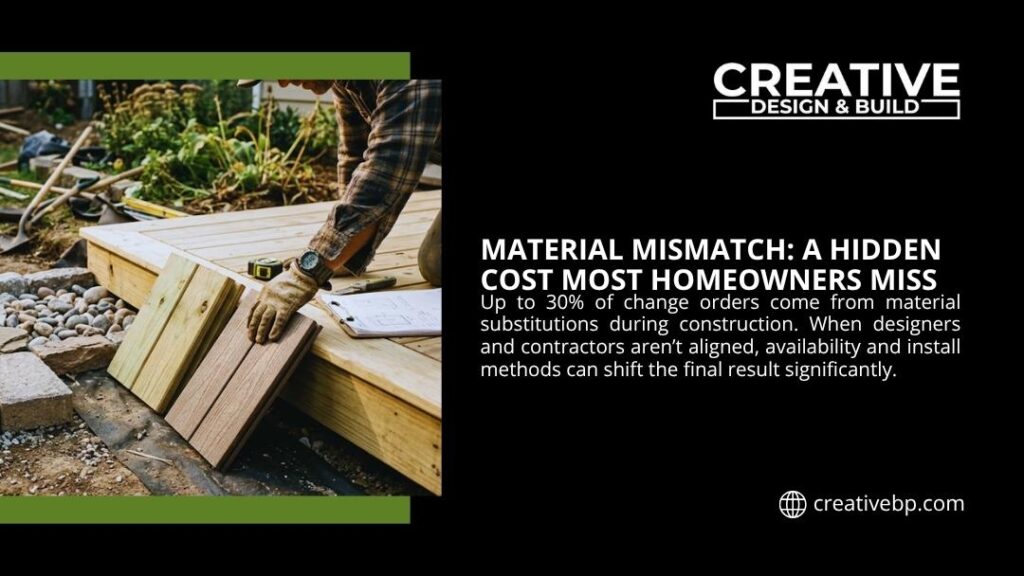
Costs don’t just come from what you plan; they come from what changes along the way. If a contractor has to reinterpret a design, that takes time. If materials shift mid-project, that adds cost. If timelines stretch, labor increases.
According to the National Association of Realtors, outdoor improvements can return close to full value, but only when executed correctly. That word matters more than most people realize.
| Cost Area | Separate Hiring | Design-Build |
| Initial Fees | Lower | Slightly higher upfront |
| Adjustments (Change Orders) | Common | Less frequent |
| Delays | More likely | Reduced |
| Total Spend | Often grows | More stable |
So if you’re already wondering how much landscape design costs, the better question might be: how much will misalignment cost later?
The Biggest Risks of Hiring a Designer and a Contractor Separately
Before moving forward with separate hiring, it helps to understand where challenges typically arise. These aren’t guaranteed outcomes, but they show up often enough in real projects.
| Risk Area | What Happens | Potential Impact |
| Design Interpretation | Contractor reads plans differently | Changes to layout or materials |
| Communication Gaps | Delays in decisions between teams | Slower progress |
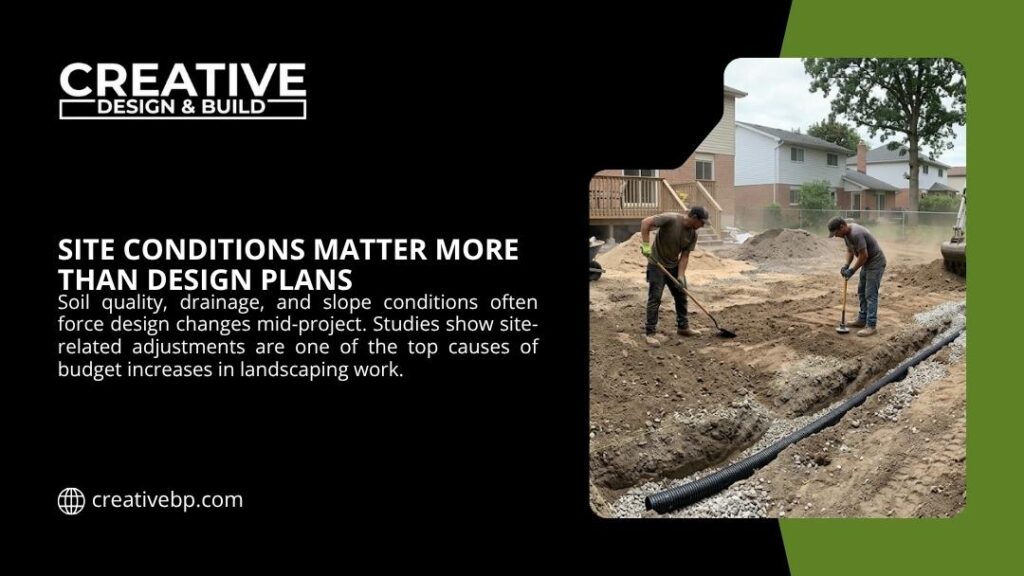
| Cost Adjustments | Unexpected site conditions | Budget increases |
| Responsibility Overlap | Unclear accountability | Project delays |
These issues usually appear mid-project, not at the beginning. Early stages often feel smooth. It’s during execution that differences become more noticeable. Understanding these risks upfront makes it easier to plan for them or avoid them altogether.
When Hiring Separately Might Actually Make Sense
There are situations where hiring separately still works well, and it’s worth being clear about that.
If the project stays fairly contained, something like a small patio area, light planting work, or a basic refresh, the process doesn’t require constant coordination. In those cases, a designer can sketch out a plan, and a contractor can follow it without too many complications.
It also tends to suit homeowners who prefer to stay involved. Some people want to review every step, compare options, and make decisions along the way instead of handing everything off. That approach can work, but it does come with a trade-off. You’re not just approving decisions, you’re managing how those decisions connect.
The tipping point usually comes down to complexity. The more layers a project has, grading, materials, structural elements, the harder it becomes to keep everything aligned when roles are split.
Why Design-Build Landscape Services Are Becoming the Preferred Choice
There’s a reason this approach has gained ground over the past several years, and it’s not just about convenience. It’s about clarity in how a project moves forward.
When one team handles both the design and the build, there’s no handoff where ideas have to be reinterpreted. Decisions happen with construction in mind from the beginning, not adjusted later when something doesn’t quite fit.
That alone changes the pace of a project. Instead of stopping to resolve questions between separate parties, adjustments happen in real time. Materials, layout, structure, everything evolves within the same conversation.
Over time, this tends to produce more consistent results. Not necessarily faster in every case, but more controlled. And when you’re dealing with high-end outdoor spaces where detail matters, that consistency becomes noticeable.
Questions to Ask Before You Hire a Landscape Designer or Contractor
Before moving forward with anyone, it helps to slow things down and ask a few direct questions. Not generic ones, the kind that reveal how a project is actually handled behind the scenes.
| Question | Why It Matters |
| How do you handle design changes during construction? | Reveals flexibility and coordination |
| Can you walk me through your process? | Shows structure and planning |
| What challenges do you anticipate? | Demonstrates experience |
| Who manages communication during the project? | Clarifies accountability |
The answers tend to tell you more than a proposal ever will. You’re not just hiring skill, you’re hiring a process.
How to Choose the Right Landscape Partner for Your Project
Choosing the right team isn’t always about who offers the lowest number or the quickest timeline. Those things matter, but they don’t tell the whole story.
What tends to matter more is how a team thinks through a project. Do they explain their approach clearly? Do they anticipate issues before they happen? Do they adjust without losing direction?
Looking at completed projects helps, but it’s worth going a step further. Pay attention to how those spaces feel. Are materials holding up? Does the layout still make sense after time has passed?
The first consultation often reveals more than expected. Not just what they propose, but how they communicate it. That part usually sets the tone for everything that follows.
Why Homeowners in Michigan Prefer Full-Service Landscape Design Build Firms
Outdoor projects in Michigan come with their own set of conditions. Freeze-thaw cycles, shifting soil, seasonal extremes, these aren’t minor factors. They shape how a space needs to be built.
Because of that, many homeowners lean toward teams that understand both the design side and the construction side within the same framework. Decisions about materials or drainage aren’t made in isolation; they’re part of a bigger system.
This tends to result in spaces that not only look refined when finished but continue to perform well over time. And that balance, between appearance and durability, is usually what people are after.
Does Hiring a Landscape Designer Add Value to Your Home?
Yes, landscaping can increase property value. There’s solid data behind this, but it’s often misunderstood. Studies from Virginia Tech point to gains of around 12.7% when outdoor spaces are thoughtfully designed and executed. But the keyword there is executed.
A strong design on its own doesn’t create value. It needs to be built correctly, with the right materials, and in a way that holds up over time. That’s where alignment between planning and construction becomes important.
When that alignment is there, the result feels intentional. Not just visually appealing, but functional in a way that makes the space part of the home rather than separate from it.
Decision Table: Should You Hire Separately or Choose Design-Build?
Before deciding, it helps to look at how different project types typically play out under each approach.
| Situation | Better Approach |
| Small patio or simple upgrade | Separate hiring |
| Phased or DIY-involved project | Separate hiring |
| Custom outdoor living space | Design-build |
| Projects with multiple features | Design-build |
| Limited time for coordination | Design-build |
As projects become more detailed, the advantages of a unified approach tend to become more apparent. Phased work is the exception worth studying closely, and planning a phased backyard renovation shows where coordination gaps between separate hires tend to cost the most. Not always immediately, but usually as the work progresses.
FAQs
Should I always hire a landscape designer before a contractor?
Not always. For small projects, a contractor may handle everything. For larger or more customized spaces, starting with a designer or a design-build team usually leads to better results.
Is design-build landscaping better than hiring separately?
In many cases, yes. It reduces miscommunication and keeps the project aligned from start to finish. That’s especially helpful for complex outdoor designs.
How do I find a good landscape designer near me?
Start by reviewing past projects, not just proposals. Seeing actual results gives a clearer idea of quality and consistency.
What questions should I ask a landscaper before hiring?
Ask about timelines, materials, how changes are handled, and whether they’ve worked on similar projects. The answers often reveal more than pricing alone.
Is it worth hiring a landscape designer for a backyard renovation?
For detailed renovations, yes. A designer helps create a cohesive plan instead of piecing things together later.
Can I save money by managing the designer and contractor separately?
Sometimes upfront, but additional costs can appear if coordination becomes an issue during construction.
How long does landscape design usually take?
It depends on the project. Simple designs may take a few weeks, while larger plans require more time for revisions and approvals.
Does professional landscaping really increase home value?
Yes, especially when design and construction work together. Well-planned outdoor spaces tend to improve both appeal and resale potential.
What This Means for Your Project
So, should I hire landscape designer and contractor separately? It depends, but only up to a point. For simpler work, the separation can hold together without much trouble. But once a project involves more moving parts, the way those parts connect starts to matter more than who handles them individually.
That’s where the project’s structure becomes just as important as the design itself. A process that keeps planning and construction aligned tends to produce results that feel more complete, not just finished, but considered.
And in the end, that’s usually what people notice. If you’re ready to move forward, reaching out is usually the next step.